
Calculators and Converters
Celsius to Fahrenheit: Formula and Useful Examples
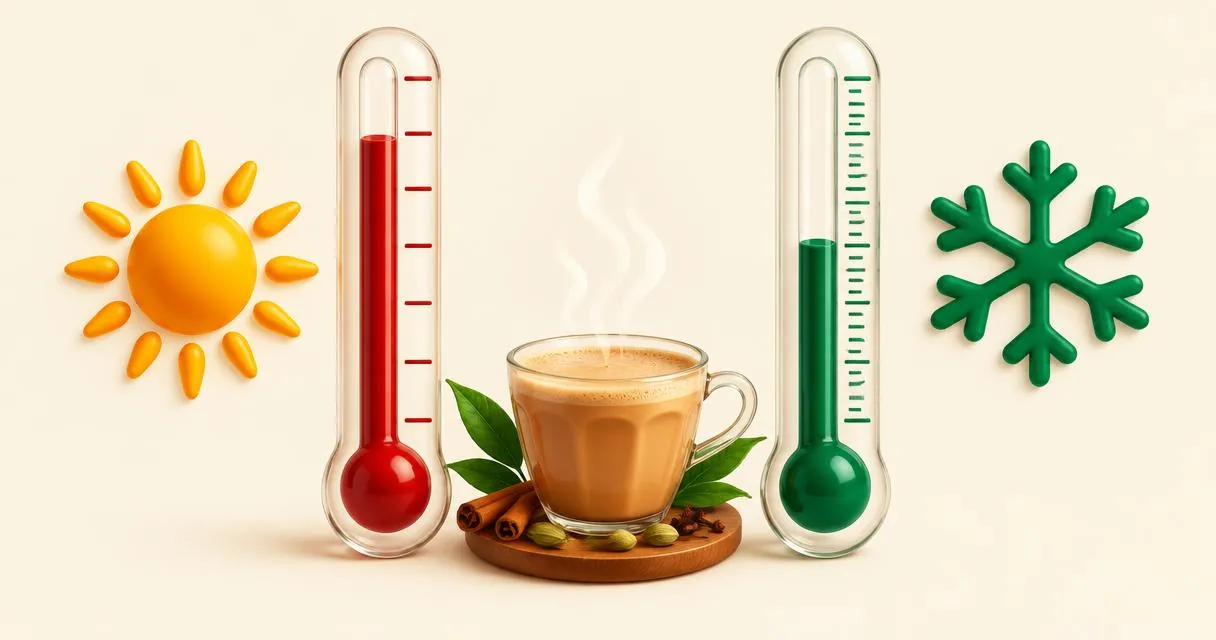
Use the Celsius to Fahrenheit formula for weather, recipes and temperature readings. Check common conversions and avoid offset mistakes.
The Celsius to Fahrenheit formula is °F = (°C × 9 ÷ 5) + 32. Multiply the Celsius temperature by 1.8, then add 32. For example, 20°C becomes 68°F, and 180°C becomes 356°F. The MayreDukaan temperature converter performs this calculation in either direction.
The order matters because these scales have different zero points as well as different degree sizes. Adding 32 alone is not enough, and multiplying by 1.8 alone converts an interval rather than a temperature reading. Here is how to apply the formula accurately.
Why the formula has two parts
NIST gives the exact conversion from Celsius to Fahrenheit as Celsius multiplied by 1.8, plus 32. The multiplication accounts for degree size: a change of one Celsius degree corresponds to a change of 1.8 Fahrenheit degrees. The addition accounts for the offset between the scales.
For a reading of 25°C, multiply 25 × 1.8 = 45, then add 32 to get 77°F. Do not calculate 25 + 32 and then multiply by 1.8; that would change the order and give an incorrect result.
The formula works for negative readings too. At −10°C, multiplication gives −18, and adding 32 gives 14°F. Keep the negative sign attached to the original number throughout the calculation.
Step-by-step conversion online
- Open the Celsius-to-Fahrenheit converter.
- Enter your reading in the Celsius field.
- Read the Fahrenheit result.
- To reverse direction, enter a value in the Fahrenheit field.
- Use the swap control if you prefer the fields displayed in the other order.
The calculation runs in your browser. The page also includes a common-conversions table. Converted input fields use up to six decimal places; the reference chart uses shorter number formatting. These are display choices, not competing formulas.
The tool converts numbers. It does not read a thermometer, identify a safe cooking temperature or diagnose a medical condition. Always keep the original context and unit with a reading when you share it.
Common Celsius-to-Fahrenheit values
| Celsius | Fahrenheit |
|---|---|
| −40°C | −40°F |
| −10°C | 14°F |
| 0°C | 32°F |
| 17°C | 62.6°F |
| 20°C | 68°F |
| 25°C | 77°F |
| 30°C | 86°F |
| 40°C | 104°F |
| 100°C | 212°F |
| 180°C | 356°F |
| 200°C | 392°F |
These are arithmetic equivalences. They do not by themselves establish weather comfort, a medical threshold or cooking safety. If a recipe or instruction gives a particular unit, preserve that unit in your notes so you do not accidentally apply the number on the wrong scale.
As a quick check, the two scales have the same numerical reading at −40. Substitute it into the formula: −40 × 1.8 + 32 = −72 + 32 = −40. That is a useful way to test whether you have remembered both operations correctly.
Converting oven temperatures
A recipe calling for 180°C corresponds mathematically to 356°F, while 200°C corresponds to 392°F. Those exact converted numbers may sit between the marked settings on an oven dial. Keep the mathematical conversion separate from any decision to use a nearby available setting.
The converter does not adjust for fan-assisted versus conventional cooking, oven calibration, dish size or recipe timing. Follow the recipe’s own guidance for those matters instead of assuming a unit conversion supplies an equipment adjustment.
NIST’s temperature guidance includes approximate oven equivalents alongside exact conversion formulas. That distinction is useful: a convenient setting in a cooking table may be rounded, while the formula still gives the precise numerical equivalent of the stated temperature.
Reverse the formula: Fahrenheit to Celsius
To convert in the other direction, subtract 32 first, then multiply by 5 and divide by 9: °C = (°F − 32) × 5 ÷ 9.
For 100°F, subtract 32 to get 68. Then 68 × 5 ÷ 9 = 37.777…°C, or approximately 37.78°C. This is a conversion example, not guidance on interpreting a body-temperature reading. Clinical interpretation depends on more than this arithmetic.
For another check, 68°F gives (68 − 32) × 5 ÷ 9 = 20°C, reversing the earlier example exactly. Use the unrounded result when checking a round trip; repeated rounding can create a small difference.
Temperature readings are not temperature changes
A rise from 20°C to 25°C is a change of 5 Celsius degrees. The corresponding readings are 68°F and 77°F, a change of 9 Fahrenheit degrees. The change is therefore 5 × 1.8 = 9, without adding 32.
This is a common source of errors in science and equipment notes. Apply the offset to a temperature reading, but not to a difference between two readings. Label the starting and ending temperatures if the intended meaning might be unclear.
Common mistakes and next step
Avoid adding 32 before multiplying, forgetting the offset entirely, dropping negative signs or treating a rough mental shortcut as an exact result. Round at the end, and retain the original reading if accuracy matters.
For other measurement tasks, try the kg-to-pounds converter or browse unit converters. For temperatures, open the Celsius-to-Fahrenheit converter, enter the reading under its actual unit, and keep the unit label with your answer.
Frequently asked questions
What is the Celsius-to-Fahrenheit formula?
Multiply Celsius by 9/5, then add 32: °F = °C × 1.8 + 32.
What is 180°C in Fahrenheit?
180°C is exactly 356°F under the conversion formula. Choosing an oven setting is a separate practical decision.
How do I convert Fahrenheit to Celsius?
Subtract 32, then multiply by 5/9. For example, 68°F becomes 20°C.
Do I add 32 when converting a temperature increase?
No. For an interval or change, multiply the Celsius difference by 1.8 without adding the offset.
Useful on MayreDukaan
Sources
Facts last checked against these sources on 15 Nov 2026, 07:43 Pakistan time.
Images: Illustration created for MayreDukaan (not a photo)
More trending articles
 Calculators and ConvertersLoan EMI Calculator: A Practical Pakistan Guide15 Nov 2026 · 4 min read
 Calculators and ConvertersHow to Convert kg to lbs: Formula and Weight Chart15 Nov 2026 · 4 min read
 Calculators and ConvertersConvert cm to Feet and Inches: Height Made Clear15 Nov 2026 · 4 min read
 EntertainmentWatch Pakistani News Live Through Official Links15 Nov 2026 · 4 min read