
Gift-Card Tampering: Check the Card and Save Proof
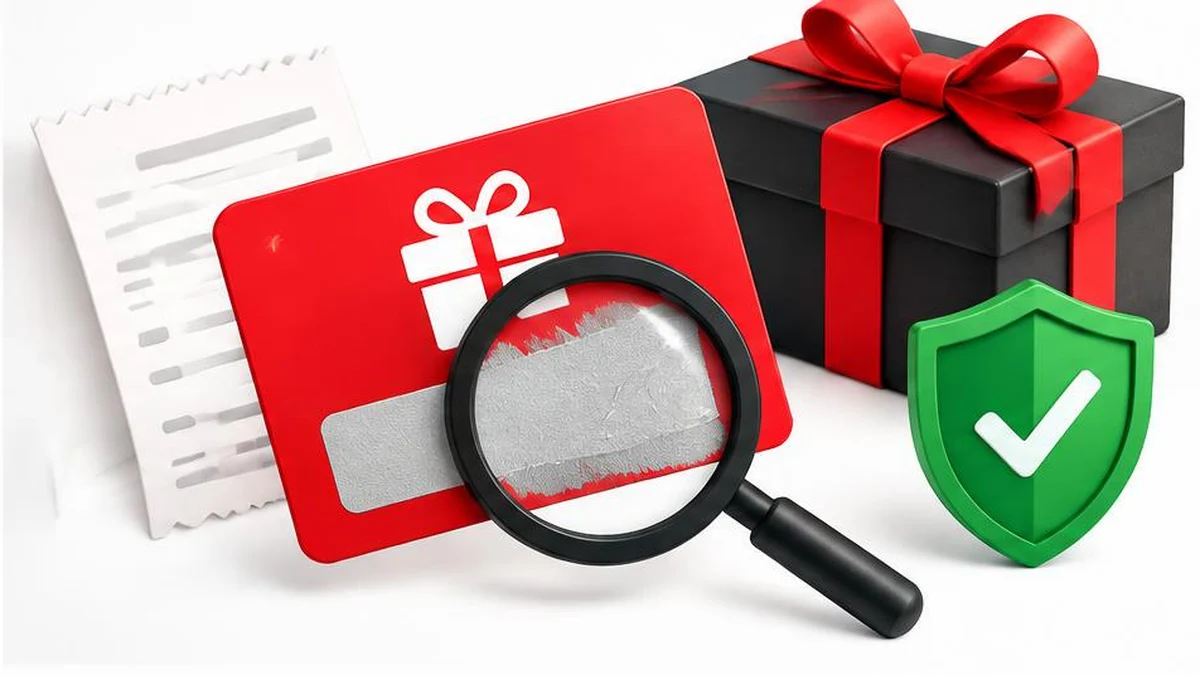
Gift-card theft can involve a compromised card before purchase or a scammer asking you to surrender its code afterwards. Inspect the packaging, buy through trusted channels and keep evidence that lets the issuer investigate a missing balance.
A gift card can lose its value without the recipient ever buying anything. The Office of the Comptroller of the Currency warns about tampered cards, stolen balances and demands to pay third parties with gift cards. Treat the card number and redemption code as valuable payment information, not as ordinary details to share in a photograph.
This guide focuses on avoiding tampering and responding to a missing balance. It does not set out state expiry rules or promise that a retailer, issuer or bank must refund every gift-card loss.
Choose the purchase route before choosing the design
Buy directly from the issuer or a trusted retailer, online or in person. The OCC advises avoiding third-party sellers. A discount offered by an unfamiliar social account or unsolicited message is not a reason to skip checking who receives your money.
For a digital card, navigate to the retailer’s genuine website yourself. Check the recipient address carefully before paying and save the order confirmation. Digital delivery removes the physical package inspection step, but it does not make a fake seller or compromised email account safe.
If someone claiming to be a bank, government office, employer or technical support service tells you to buy cards and send the codes to settle a problem, stop. This is different from buying a store card as a gift or using it yourself at that store. A demand to pay an outside caller through gift-card codes is a serious scam warning.
Inspect the physical card before loading money
The OCC identifies torn packaging and scratched-off security codes as tampering signs. Before taking a card to the till:
- Look over the packaging for damage, disturbed seals or signs that a protective covering has been removed.
- Check whether any code that should be concealed is already visible.
- If something looks wrong, do not buy that card. Show it to a member of staff rather than trying to repair or investigate it yourself.
- Ask the retailer about its activation process and what purchase record you should retain.
A normal-looking card is not proof that it is safe. Visual checks are a precaution, not a complete fraud test. Do not scratch off an intact security panel in the shop merely to inspect it; that may expose the very information you need to protect.
Keep the evidence separate from the gift
Retain the purchase and activation receipts, order confirmation and original packaging where available. Record when and where you bought the card. Give the recipient enough information to identify the issuer and obtain purchase assistance, while keeping your own backup of the transaction record.
Do not post a photograph showing the complete number, barcode or redemption code. If you need a reference image for an ordinary email, make a redacted copy using a trusted redaction method, then inspect the exported file. Cropping is not a substitute for securely storing the original evidence.
For practical file preparation, rotate a receipt photo if it is sideways, use HEIC to JPG if support cannot open your phone’s image, and assemble selected images with image to PDF. These are document-handling tools, not card validators. Keep the originals and do not place unredacted card codes into unnecessary tools or public uploads.
Check a balance through the issuer, not an advertisement
Use the issuer’s independently verified website or customer service channel. Do not follow an unsolicited “balance recovery” message. If a web search is necessary, inspect the results carefully rather than assuming the first result is the official balance checker.
The legitimate issuer may need card information to investigate. Share it only through a verified private channel and ask what is necessary. A stranger offering to “test” the card does not need a photograph of both sides or the redemption code.
If money is missing, contact the issuer promptly
Contact both the card issuer and the retailer that sold it. Explain whether the card never activated, showed an unexpected balance, or lost value after purchase. Give the purchase date, retailer, receipt reference and any relevant messages through the verified support channel.
The OCC says some companies may be able to freeze a remaining balance if the problem is reported quickly. Ask whether that is possible, what evidence is required and how to obtain a case reference. A freeze may preserve what remains; it is not a promise to restore money already taken.
If a bank card was also exposed or charged without authorization, notify that financial institution separately. Describe the facts accurately: an authorized purchase followed by gift-card theft is not necessarily the same dispute as an unauthorized bank-card charge.
Report without paying a second scammer
Report the incident to the FTC at ReportFraud.ftc.gov and retain the report details. The FTC’s text-scam guidance also advises not responding to unexpected texts and contacting companies through independently known channels. Apply that rule to anyone offering to recover a balance for an upfront fee.
Keep a short timeline of purchases, balance checks and support contacts. It makes follow-up clearer and avoids repeatedly sending complete sensitive records. Research reviewed November 17, 2026; recovery depends on the card, issuer and circumstances, with no universal refund guarantee.
Frequently asked questions
What are visible signs of tampering?
The OCC flags torn packaging and scratched-off security codes. Do not buy a card that appears disturbed.
Does intact packaging guarantee safety?
No. Inspection reduces avoidable risk but cannot establish that a card is uncompromised.
Are digital cards immune?
No. Fake sellers, phishing and exposed account access can still put digital cards at risk.
What records should I keep?
Keep the purchase and activation receipts, order confirmation, packaging and a timeline of relevant events.
Can an issuer freeze a stolen balance?
Some issuers may be able to freeze remaining funds if contacted quickly. Availability and recovery are not guaranteed.
Should I send a photo of the card to someone offering help?
Not to an unsolicited contact. Verify the issuer independently and share only the information required through a private official channel.
Useful on MayreDukaan
Sources
Facts last checked against these sources on Nov 16, 2026, 8:44 PM ET.
Images: Original AI-generated illustration by MayreDukaan; conceptual, not a product screenshot.
More trending articles
 Shopping and DealsWinter Outfit Ideas for Women 2026: Smart Layers16 Nov 2026 · 4 min read
 Shopping and DealsChristmas Gifts for Women Under $50: Idea Guide16 Nov 2026 · 4 min read
 Shopping and DealsBest Winter Coats for Women: A Smart Buying Guide16 Nov 2026 · 3 min read
 Shopping and DealsBlack Friday Fashion 2026: Announced Sales Guide16 Nov 2026 · 3 min read