
Australian Grocery Unit Prices: Compare Pack Value
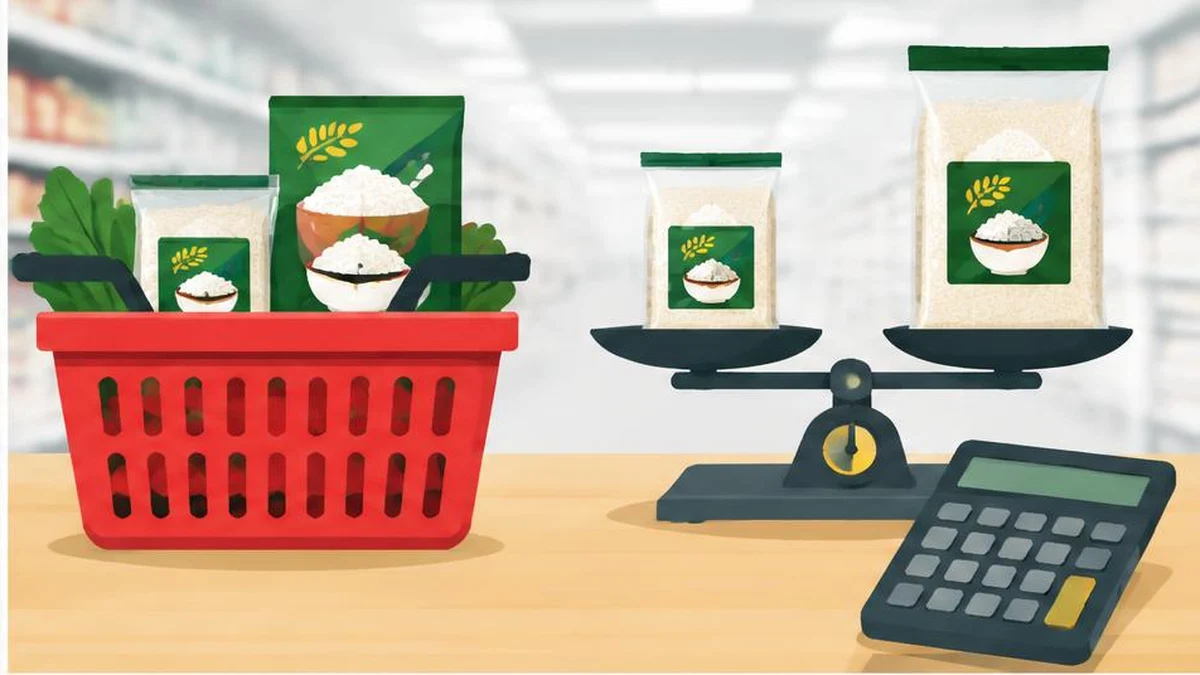
The selling price tells you what you pay for the pack. The unit price expresses its cost on a standard quantity basis so that different packs are easier to compare. The ACCC explains that unit pricing helps shoppers compare value and sets out obligations for grocery retailers covered by the Unit Pricing Code. A bigger pack or a bright discount label is not automatically the cheaper choice. Start with the numbers, then consider whether the product and quantity suit your household.
Read both prices on the shelf
The selling price tells you what you pay for the pack. The unit price expresses its cost on a standard quantity basis so that different packs are easier to compare. The ACCC explains that unit pricing helps shoppers compare value and sets out obligations for grocery retailers covered by the Unit Pricing Code. A bigger pack or a bright discount label is not automatically the cheaper choice. Start with the numbers, then consider whether the product and quantity suit your household.
Understand why some shops display no unit price
The ACCC says the code applies to qualifying grocery retailers, including online businesses selling the specified range of grocery categories. Its guidance also distinguishes physical stores by grocery selling area and describes exemptions. Not every shop selling food falls within the same obligations. Therefore, a missing unit label at a small specialist seller is not enough by itself to establish a breach. Conversely, an online store should not assume it is exempt merely because it has no large customer-facing premises.
Compare on a genuinely common basis
Check whether the label is per kilogram, litre, item or another applicable unit. Do not compare the bare numbers when the denominators differ. For a hypothetical example, $4 for 500 grams is $8 per kilogram, while $5.40 for 750 grams is $7.20 per kilogram. The second pack has the lower comparable price even though it costs more at checkout. These figures are invented teaching examples, not observed prices. Use the actual quantity and price for the products in front of you.
Check whether the products are comparable
A lower unit price does not settle differences in concentration, edible yield, dietary needs or product quality. A diluted cleaner and a concentrate may need a different comparison based on the instructions for use. Bone-in and boneless foods may not provide the same usable amount. Keep these practical considerations separate from the retailer’s prescribed display basis. Do not rewrite an official unit label in your notes and then assume your personal comparison is the legal format the retailer should have used.
Look closely at special offers
For a multibuy, work out the total quantity you must purchase and the total amount payable. Ask whether the offer requires membership or a particular number of packs and whether you will use them before spoilage. Compare the actual offer with the ordinary alternative, not a headline percentage alone. The ACCC’s price-display guidance discusses clear and accurate pricing and total price information. A promotion can be numerically attractive but still unsuitable if it locks your budget into food you cannot use.
Use supporting calculations carefully
The percentage calculator can help compare the relative difference between two already-correct unit prices. The kilograms to pounds converter is relevant when a recipe or overseas reference uses pounds. The litres to gallons converter may help interpret an imported volume reference, but confirm the gallon convention. These tools do not inspect shelf labels, determine code coverage or choose the required Australian display unit. Prefer a direct metric comparison when both grocery products already use metric quantities.
Keep useful evidence when something looks wrong
Photograph the product and associated price labels where permitted, noting the shop, date, quantity and promotion conditions. Recalculate once to exclude a unit mismatch or a reading error, then raise a clear question with the retailer. If you report a possible code issue, use the ACCC’s official information and reporting route rather than expecting an arithmetic tool to resolve it. The ACCC says it does not resolve individual unit-pricing complaints. Keep your claim narrow: a documented discrepancy is more useful than a sweeping accusation about the entire store.
Final review checklist
- Match the comparison unit before comparing numbers.
- Check membership, multibuy and waste implications.
- Document a discrepancy before raising it with the retailer.
Evidence and scope
Research checked on 17 November 2026. The linked primary guidance supports this workflow; illustrative scenarios are not measured market results. Recheck the current official requirements before a consequential decision. 1 2
Frequently asked questions
Is a larger pack always better value?
No. Compare the same unit basis and consider waste.
Does every grocery shop have to show unit prices?
No. Coverage and exemptions depend on the code and business circumstances.
Can I compare cents per item with dollars per kilogram?
Not directly. Use a meaningful common basis.
Does a discount percentage tell the whole story?
No. Check quantity, eligibility conditions and the actual amount payable.
Will a calculator enforce the code?
No. Calculators provide arithmetic, not enforcement or legal assessment.
Useful on MayreDukaan
Sources
Facts last checked against these sources on 17 Nov 2026, 06:40 Pakistan time.
Images: Original AI-generated illustration by MayreDukaan; conceptual, not a product screenshot.
More trending articles
 Shopping and DealsUK Fake Online Shops: Check the Seller Before Paying17 Nov 2026 · 5 min read
 AI and SoftwareVerify an AI Summary Against the Original Document17 Nov 2026 · 5 min read
 Artificial IntelligenceGemini Activity Privacy: History, Training and Deletion17 Nov 2026 · 5 min read
 AI and SoftwarePrepare a Spreadsheet for Safer Gemini Analysis17 Nov 2026 · 4 min read