UK Fake Online Shops: Check the Seller Before Paying
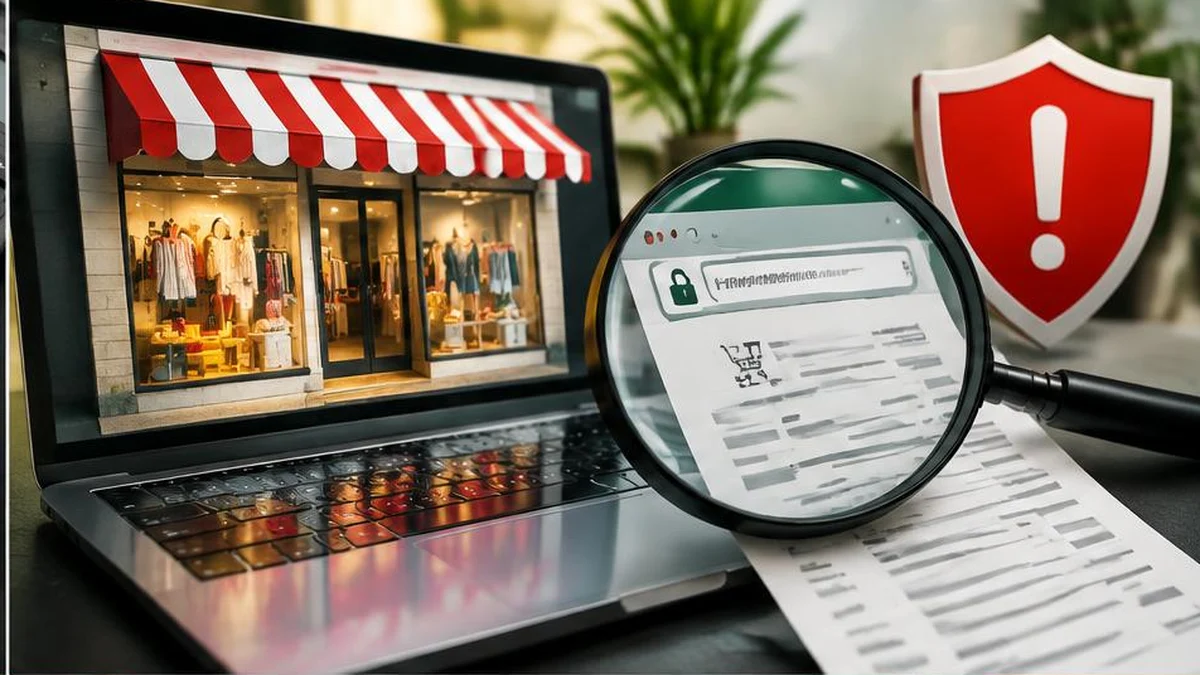
A copied storefront can look convincing while sending your payment to a criminal. Check the seller independently before entering details, understand that payment protections have conditions, and contact your bank promptly if you believe you have paid a fake shop.
A convincing product page is not proof that an online shop belongs to the brand it displays. The UK’s National Cyber Security Centre shopping guidance warns that criminals can copy logos, product listings and website designs, then use a deceptive domain to make the imitation look familiar.
Before paying an unfamiliar seller, leave the promotion and establish who operates the shop. If you have already paid and suspect fraud, skip the browsing checks for now: contact your bank immediately through its official app, website or the number on your card.
Check the seller outside its own storefront
Type a known official brand address directly, or search carefully for the organisation. Read the results instead of automatically choosing the first listing. A paid placement or social media advertisement does not verify the seller.
Compare the domain with the genuine brand’s independently located site. Extra words, changed spelling and an unfamiliar address deserve further checking. HTTPS means a connection is encrypted; it does not certify that the business receiving your money is honest.
Look for independent information about the seller and reviews from sources you trust. Reviews displayed only on the shop’s own pages are not independent evidence. A believable address, company name or registration detail can be copied, so consider whether several pieces of information actually match the business you intend to buy from.
Check delivery promises, returns information and contact routes before checkout. Missing or contradictory details are a reason to pause. A very low price and a countdown timer should not shorten your verification process. If you cannot establish who will supply the item, leaving the purchase is a valid decision.
Use technical checks only for their limited purpose
You may be able to inspect a link as text without opening it. A URL decoder can make percent-encoded text easier to read, but it cannot tell you whether a shop is legitimate. Do not paste private account links or checkout tokens into unnecessary tools, and do not follow a decoded destination just to test it.
Matching spelling is only one check. A site can have a plausible domain and still be dishonest, while a legitimate small retailer may use an unfamiliar name. The point is to establish the business through independent evidence, not to award a safety badge based on one technical clue.
Choose payment with conditions in mind
The NCSC recommends a credit card for online purchases if you have one, and advises against direct bank transfer. Some qualifying credit-card purchases may have protection under the Consumer Credit Act. That is not a promise that every transaction, payment chain or loss qualifies.
Debit-card chargeback is a voluntary scheme with rules, evidence requirements and time limits. Payment platforms have their own conditions and exclusions. Ask your bank or provider which process applies to your specific transaction rather than assuming that a payment logo guarantees reimbursement.
If a seller suddenly insists on bank transfer after advertising other payment methods, stop and reassess. Do not accept pressure to move outside a marketplace’s checkout or mark a commercial payment as a personal transfer merely to secure a discount.
Give the checkout only what it needs
The NCSC recommends providing only required details. Consider guest checkout when you do not need an ongoing account, and avoid saving payment details with an unfamiliar store. An ordinary delivery purchase should not require you to disclose banking passwords or send one-time banking codes to a seller.
If you create an account, use a unique password. A password generator can help create one; keep it in a trusted password manager and enable two-step verification where available. A strong password protects an account, not the honesty of the shop itself.
If you paid, secure the payment and preserve evidence
Tell your bank promptly that you suspect an online shopping scam. Explain the payment method, date, amount and what happened. Distinguish between a payment you authorised to a fraudulent seller and an additional charge you did not authorise. Ask about securing exposed card details, attempting recovery and the evidence or deadlines relevant to a claim.
Keep the order confirmation, receipt, website address, product description, messages and transaction reference. Save screenshots of the page without repeatedly engaging with it. Selected screenshots can be assembled using image to PDF for a support request. Keep original files and redact unrelated personal information in shared copies; the tool does not verify that a shop is fraudulent.
If you reused a password on the fake site, change it on the genuine affected services, especially your email. Stop engaging with anyone offering guaranteed recovery for an upfront payment. A reporting reference is useful evidence, not a promise of reimbursement.
Use the correct UK reporting route
The NCSC shopping guidance reviewed for this article directs people who were tricked into payment to Report Fraud for England, Wales and Northern Ireland, or Police Scotland for Scotland. Use the current links from the official NCSC guidance rather than an unsolicited number or a search advertisement claiming to be a recovery agency.
You can also report a suspected scam website through the NCSC’s official reporting route. Its shopping recovery guidance is a starting point for next steps. Reporting a website helps authorities respond; it does not replace contacting your bank urgently.
Research reviewed November 17, 2026. Reporting routes and payment rules can change. This is UK-focused safety information, not a determination of legal entitlement or a universal refund guarantee.
Frequently asked questions
Does HTTPS mean a shop is genuine?
No. It encrypts the connection but does not verify the seller’s honesty.
Are reviews on the shop enough?
No. Look for independent information from sources you trust and check that the details refer to the same seller.
Is a credit-card refund guaranteed?
No. Eligibility depends on the transaction and applicable rules. Ask your issuer which claim process applies.
What should I do first after paying a suspected scam shop?
Contact your bank immediately through an official channel and explain the payment and any exposed details.
Where do I report a UK shopping scam?
The NCSC guidance directs payment-scam reports to Report Fraud for England, Wales and Northern Ireland, or Police Scotland for Scotland. Follow its current official links.
Can a URL decoder check whether a seller is safe?
No. It only makes encoded text readable and is not a reputation or fraud-checking service.
Useful on MayreDukaan
Sources
Facts last checked against these sources on 17 Nov 2026, 06:44 Pakistan time.
Images: Original AI-generated illustration by MayreDukaan; conceptual, not a product screenshot.
More trending articles
 AI and SoftwareVerify an AI Summary Against the Original Document17 Nov 2026 · 5 min read
 Artificial IntelligenceGemini Activity Privacy: History, Training and Deletion17 Nov 2026 · 5 min read
 AI and SoftwarePrepare a Spreadsheet for Safer Gemini Analysis17 Nov 2026 · 4 min read
 Android and SmartphonesAndroid Unknown Tracker Alerts: A Safety-First Guide17 Nov 2026 · 5 min read