
Buying From Abroad in Canada: Calculate Delivered Cost
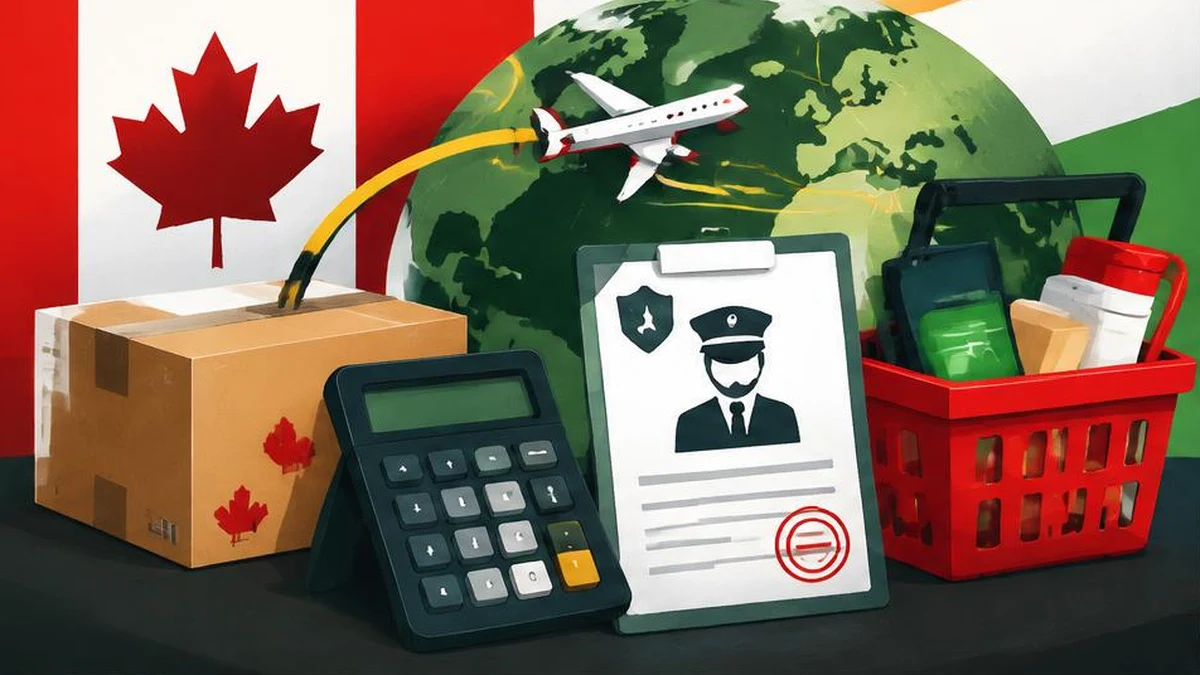
Build an item-specific import-cost worksheet instead of assuming a foreign sale price is the final Canadian price. Verify delivery terms and payment requests separately.
Start with a delivered-cost question
A foreign shop’s sale price is not enough to compare it with a Canadian offer. The useful question is: what will this exact item cost, in Canadian dollars, by the time it reaches your address? Shipping, currency conversion, duties, taxes and carrier services can change the answer. Some amounts may be collected at checkout; others may be collected later.
The Canada Border Services Agency’s importing-by-mail guidance explains that imported mail is screened and assessed for applicable duties and taxes. It also tells buyers to check courier shipping and handling charges before purchasing. This article gives a worksheet, not a tariff quotation or a promise that a particular parcel will clear without charges.
Collect the details that change the estimate
Before calculating anything, save the product page and checkout terms. Identify the actual seller, not only the marketplace or delivery company. Canada’s Office of Consumer Affairs recommends checking seller identity, international costs and return policies when shopping online.
Ask the seller or carrier these questions:
- What currency will actually be charged?
- What is the product description, material and intended use?
- Where is it manufactured, and where will it ship from?
- Which postal or courier service will carry it?
- Which import amounts are included in the checkout total?
- Who must pay any later assessment or clearance charge?
Do not assume a warehouse address proves manufacturing origin. Record the information rather than guessing a tariff classification. For an expensive or unusual purchase, obtain an item-specific answer through the carrier or CBSA resources before committing.
Build a worksheet without double counting
Keep amounts in one currency and label uncertain entries. The following table is a planning structure, not a list of charges that applies to every order.
| Component | What to record | What to verify |
|---|---|---|
| Item price | Price after the seller’s discount | Currency and quantity |
| Delivery | Shipping and insurance if selected | Whether already included |
| Conversion | Your payment provider’s conversion terms | Rate and any separate charge |
| Import assessment | Applicable duty and tax estimate | Exact item and destination |
| Carrier services | Quoted handling or clearance charges | Whether prepaid or later billed |
Use the discount calculator only to work out the merchandise discount. A reduction in merchandise price is not the same thing as a reduction in every import-related amount. If a verified charge uses a percentage, the percentage calculator can help with arithmetic; it does not identify the correct legal rate or assessment base.
For a purely fictional budgeting example, suppose the converted merchandise price is CAD 120, delivery is CAD 20, and a carrier gives a combined estimate of CAD 30 for remaining import and service amounts. The planning total is CAD 170. Those invented amounts are not Canadian rates. If checkout already collected the CAD 30, do not add it again.
Distinguish postal handling from courier services
CBSA says Canada Post charges a handling fee on mailed goods subject to duty or tax. Courier arrangements are different: a courier may handle customs details for personal-use imports, and the buyer should verify its applicable charges. Ask for an itemized quote rather than treating every line described as an “import fee” as government tax.
Save the checkout statement that says whether duties are included. If the seller changes its wording, compare your saved text with the new version using text compare, after removing names, addresses and order identifiers. This helps identify a changed promise; it does not determine whether a charge is lawful.
Budget for the return before placing the order
A cheap imported item can become an expensive mistake if return shipping is costly. Check the return destination, authorization process, seller deductions and who pays transport. Do not assume a merchandise refund automatically refunds carrier services, currency-conversion costs or import assessments.
CBSA’s mail guidance links separately to processes for disputing assessments and applying for eligible duty and tax refunds. Keep the import paperwork and proof of any return. The existence of an application process is not a guarantee of approval or reimbursement of every cost.
Verify a later payment request independently
A real parcel does not make every message about it genuine. CBSA warns that impersonators use calls, texts and email to seek payments or personal information. Open the carrier’s official website yourself and check the tracking record instead of following an unexpected payment link.
Before paying, reconcile the parcel reference, carrier invoice and original checkout terms. If they disagree, contact the seller or carrier through independently obtained details. Keep uncertain charges outside the confirmed total until explained. The best buying decision compares a documented delivered-cost estimate with a local alternative, while preserving room for costs that remain unresolved.
Frequently asked questions
Is a sale price my final Canadian cost?
Not necessarily. Check delivery, conversion, applicable import assessments and carrier services, including amounts already prepaid.
Are postal and courier charges identical?
No. CBSA describes Canada Post handling separately and advises buyers to verify courier shipping and handling charges.
Does shipping from a country establish origin?
Do not assume that. Ask for manufacturing-origin information and an item-specific assessment where needed.
Can a calculator determine my tariff rate?
No. These calculators perform arithmetic; they do not classify goods or determine current legal rates.
Will returning an item refund every charge?
No such guarantee is made. Seller refunds, carrier costs and possible import-assessment refunds are separate questions.
How should I check a customs payment message?
Navigate independently to the carrier’s official tracking and billing channels and reconcile the request with your order records.
Useful on MayreDukaan
Sources
- www.cbsa-asfc.gc.ca — postal-postale-eng.html
- ised-isde.canada.ca — online-shopping
- cbsa-asfc.gc.ca — pyaf-pvcf-eng.html
Facts last checked against these sources on 17 Nov 2026, 06:44 Pakistan time.
Images: Original AI-generated illustration by MayreDukaan; conceptual, not a product screenshot.
More trending articles
 Shopping and DealsUK Fake Online Shops: Check the Seller Before Paying17 Nov 2026 · 5 min read
 AI and SoftwareVerify an AI Summary Against the Original Document17 Nov 2026 · 5 min read
 Artificial IntelligenceGemini Activity Privacy: History, Training and Deletion17 Nov 2026 · 5 min read
 AI and SoftwarePrepare a Spreadsheet for Safer Gemini Analysis17 Nov 2026 · 4 min read