
Canada Customs Fee Texts: Verify Before You Pay
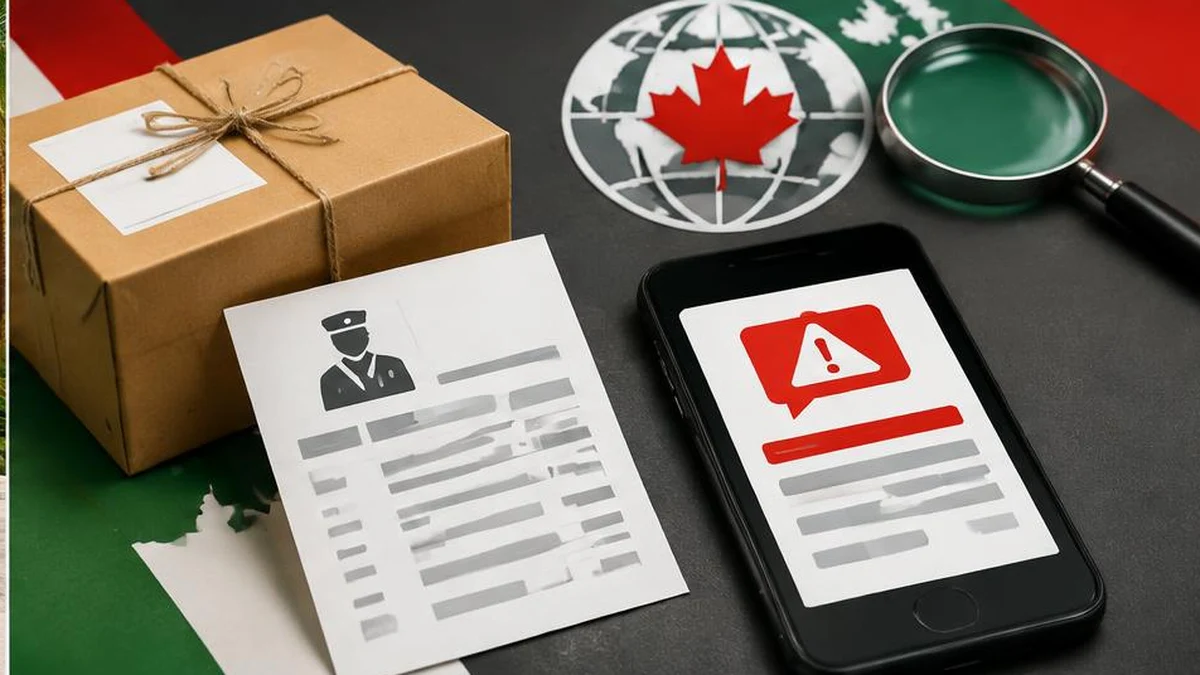
A real imported parcel can attract charges, but that does not authenticate a text demanding payment. Verify the shipment through the actual carrier and distinguish its collection role from CBSA’s customs role.
A customs-fee text is not trustworthy merely because you are expecting an international parcel. Genuine import charges and fraudulent payment demands can exist at the same time. The useful question is not simply whether customs charges are possible: it is whether the request belongs to your shipment and comes through a verified collection channel.
Separate CBSA assessment from payment collection
The CBSA fraud warning explains that impersonators use emails, texts and calls to obtain information or payments. Names, logos, email addresses and caller-display numbers can be misleading. CBSA says it never initiates a request for your Social Insurance Number and credit card number by telephone, text or email.
For mail packages, Canada Post is responsible for collecting duties and taxes before delivery. For courier shipments, the courier arranges payment of duties and taxes and holds the package pending payment. This difference matters: a message claiming to be CBSA is not authenticated by an accurate-looking tracking number or a plausible amount.
CBSA can call recipients or importers to clarify package declarations. Therefore, “CBSA never calls anyone” is not a safe rule. Its fraud warning specifically identifies calls demanding duty payment on a held package and threatening penalties, including jail, as a scam.
Check the shipment without using the message link
Use the retailer’s genuine order record to identify the carrier and tracking reference. Open the carrier’s established app or type its known official website address yourself. If you cannot establish the address, use independently verified contact information rather than a number supplied in the suspicious message.
- Match the tracking reference to the order you actually placed.
- Review the shipment in the carrier’s own system.
- Check whether it shows a charge or requires further action.
- Ask the carrier to explain an unclear charge through its verified support channel.
- Use the payment route confirmed through that channel, not the original text.
Do not provide identity or card details merely to see whether a link is genuine. If the carrier cannot reconcile the message with your shipment, leave the demand unpaid while you investigate. Conversely, do not assume that every import charge is false and abandon a legitimate delivery without contacting the carrier.
Understand the message patterns
This comparison follows the collection roles and impersonation examples in the CBSA fraud warning; it is not a tariff calculator or a guarantee that a particular message is authentic.
| Situation | What to establish independently |
|---|---|
| Alleged CBSA text asks for card or SIN details | Do not supply them; consult the official fraud guidance |
| Call threatens jail unless parcel duties are paid | Treat the threat as a scam warning and stop the interaction |
| Canada Post shipment shows a charge | Confirm it through Canada Post’s official channel |
| Courier requests import payment | Verify the request directly with that courier |
| Caller asks to clarify a declaration | Verify identity and purpose before disclosing information |
Small demands can still expose payment details. A professional-looking page, familiar logo or message arriving near a real delivery does not remove the need for independent checking.
Why the amount cannot authenticate the request
CBSA’s importing by mail guidance describes screening, declarations and assessment of duties and taxes. It notes that assessed amounts appear on the postal import form attached to the mail item. The existence of this process does not make an unsolicited payment page official.
The item, its origin and applicable treatment can affect an assessment. This article does not supply a universal customs percentage, promise an exemption or calculate a courier’s fees. Ask the verified carrier to distinguish the customs assessment from any separate service charge. Keep the explanation and supporting documents if you need to query the bill.
If you clicked, submitted details or paid
Close the suspicious page. If you entered payment or banking information, contact the relevant bank or provider promptly through its official channel. Explain exactly what information was exposed and ask about protective steps and available dispute procedures. Do not assume that deleting the text reverses a payment or removes the exposure.
Keep the original text, sender information, destination address, transaction reference and screenshots. CBSA’s warning links to the Canadian Anti-Fraud Centre reporting page. Reporting supports the record; it does not guarantee repayment or replace notifying your financial provider.
Prepare a clear, privacy-conscious record
The URL Encoder/Decoder can reveal encoded characters in copied address text, but it cannot certify a website. Do not paste private login links or payment-session tokens into it. Text Compare can show differences between redacted message versions without deciding which one is genuine.
Use Image to PDF only for screenshots you have checked and redacted for sharing. Keep original evidence privately, and send sensitive records only through the bank or reporting body’s verified submission process. The decisive check remains the carrier’s independently accessed record, not the appearance of the incoming text.
Frequently asked questions
Does a real parcel make a customs text genuine?
No. Verify the shipment and any payment request directly with the carrier using an independently accessed channel.
Who collects duties on mailed packages?
CBSA’s fraud guidance says Canada Post collects duties and taxes before a mail item is delivered.
Who handles courier import payments?
The courier arranges payment of duties and taxes. Independently confirm any demand with that courier.
Can CBSA ever call about a package?
Yes, it may clarify declaration details. That does not authenticate a caller demanding payment or threatening jail.
Can caller ID prove it is CBSA?
No. The CBSA warning describes misleading displayed numbers, names and other identifiers.
What if I entered my card details?
Contact your card provider promptly through its official channel, explain the exposure and ask about protective and dispute options. Keep evidence.
Useful on MayreDukaan
Sources
- CBSA warns about impersonation
- CBSA screens mailed imports, assesses duties/taxes and requires declarations. Tariff treatment can change
Facts last checked against these sources on 17 Nov 2026, 06:40 Pakistan time.
Images: Original AI-generated illustration by MayreDukaan; conceptual, not a product screenshot.
More trending articles
 Shopping and DealsUK Fake Online Shops: Check the Seller Before Paying17 Nov 2026 · 5 min read
 AI and SoftwareVerify an AI Summary Against the Original Document17 Nov 2026 · 5 min read
 Artificial IntelligenceGemini Activity Privacy: History, Training and Deletion17 Nov 2026 · 5 min read
 AI and SoftwarePrepare a Spreadsheet for Safer Gemini Analysis17 Nov 2026 · 4 min read