
Pakistan Supplier Invoices: Verify Bank-Detail Changes
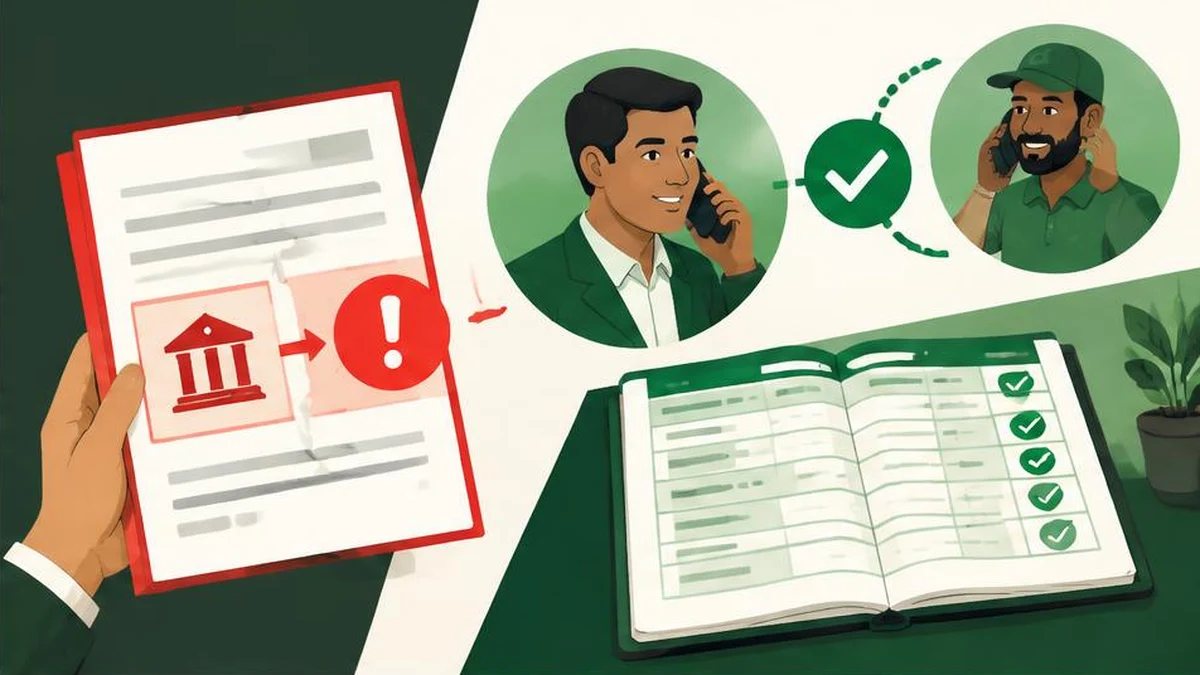
A supplier invoice can look familiar while its payment destination has changed. Build a repeatable check for new bank details, separate verification from payment approval where practical, and preserve an audit trail.
A changed supplier account should trigger a fresh verification step, even when the invoice amount and email conversation look familiar. For a small business in Pakistan, the practical aim is simple: do not let one convincing message update the supplier record and authorize the payment without an independent check.
What the sources support
The FTC’s Scams and Your Small Business guide, published in July 2023, supports staff training and independent scrutiny of invoices and payment requests. It is general US fraud-prevention guidance, not Pakistani law or evidence of a Pakistan-specific increase.
For local complaint context, the State Bank of Pakistan’s Sunwai FAQ identifies the bank’s Complaint Management Unit as the first forum for banking complaints and explains further routing. Prevention advice and complaint routing serve different purposes: an internal checklist cannot reverse a transfer, and a formal complaint route should not delay an urgent call to your bank about suspected fraud.
These sources were reviewed in the existing research dated 17 November 2026. They establish a real business risk and useful process controls, not a measured seasonal trend, a current invoice-fraud rate or a guaranteed recovery right.
Mark the changes that require a hold
Make the hold rule visible to whoever receives invoices, updates supplier records and releases payments. Apply it to bank-detail changes even if the supplier relationship is longstanding. Changes to the payee name, account identifier, contact person or payment method deserve attention too.
| Change or pressure | Suggested internal response |
|---|---|
| New account or IBAN on a routine invoice | Hold the update pending independent verification |
| New contact number included with new details | Do not use it as the sole verification channel |
| Unexpected request for split payments | Reconfirm purpose and recipient before approval |
| Urgent message bypassing normal approval | Keep the hold and alert the designated approver |
| Old and new invoices disagree | Record the differences and resolve them before payment |
This is a recommended workflow, not a claim that a regulator mandates these exact controls. A legitimate supplier can change banks. The point is to verify the change rather than deciding that every alteration is fraudulent or accepting every familiar-looking invoice.
Use a callback route that predates the request
Call the supplier using a number already held in your verified records, not the number in the change email or attached invoice. If that contact is no longer valid, re-establish the relationship through an independent channel before proceeding. Replying to the same email thread only checks that someone can answer that thread.
Ask the established contact to confirm the change and identify the person authorized to request it. Confirm the relevant account identifier, beneficiary name and effective date through your approved process. Do not exchange passwords, OTPs or banking login details. Record who verified the request, the channel used and when the check took place.
Keep the supplier update separate from payment release
Where staffing permits, have a second person review a verified account change before the next payment. In a very small business, the owner can provide that second review. This is a practical control, not an invented feature of a bank account or payment system.
Compare the updated supplier record with the actual payment screen before release. A correct invoice does not help if an old template or manually copied identifier sends funds elsewhere. If your bank displays beneficiary information, scrutinize it, but do not assume every bank offers the same name-checking function or that a displayed name guarantees legitimacy.
Keep a short decision record
A useful internal note should answer four questions: what changed, how it was independently checked, who approved it and which payment used the new details. Retain the original invoice and request alongside the verified version. Do not silently overwrite the only copy of the earlier account information.
- Record the supplier and invoice reference.
- Describe the payment-detail change without including unnecessary secrets.
- Note the independently sourced contact route and verification time.
- Identify the reviewer and release decision.
- Attach the payment reference after sending.
For recurring payments, tell staff where the approved supplier record lives. Otherwise an old email attachment can become an unofficial master copy. Explain the process to suppliers in advance so a verification call feels routine rather than accusatory.
If a suspicious transfer has already been sent
Contact your bank immediately through its official channel. Provide the payment reference, amount, time and recipient details, and explain that the destination may have been fraudulently substituted. Ask what action is possible for that specific transfer and obtain a case reference. Do not assume a transfer can be stopped or that recovery is guaranteed.
Notify the real supplier through your established contact route and hold further related payments while the facts are checked. Preserve messages, attachments and the change history. If an email account may be compromised, use a separate trusted channel and involve whoever manages your business account security.
For a banking complaint, consult the current Sunwai FAQ and your bank’s Complaint Management Unit. Follow the applicable escalation route for your institution and issue; do not treat one deadline as universal. A complaint record is not a substitute for urgent fraud notification.
Use record tools without uploading banking secrets
Text Compare can highlight differences between redacted invoice text. It cannot authenticate the supplier or validate an IBAN. Image to PDF can assemble redacted screenshots, while the Date Difference Calculator can help maintain a timeline. None connects to your bank or determines complaint eligibility. Keep originals privately and use verified bank submission channels for sensitive evidence.
Frequently asked questions
Should every bank-detail change be verified?
Yes as an internal precaution. A genuine supplier can change accounts, but the new destination should be independently confirmed before use.
Which number should staff call?
Use a supplier number already in verified records, not the number supplied in the change request. Re-establish contact independently if the old number is invalid.
Is replying to the same email thread enough?
No. It does not provide an independent check of the changed details. Use an established separate contact route.
Who should approve a new beneficiary?
Assign a designated reviewer, preferably someone other than the person entering the change where staffing permits. This is a suggested business control, not a universal banking requirement.
What if payment was already sent?
Contact your bank promptly using its official channel, supply the transaction details and ask what action is possible. Recovery is not guaranteed.
Where does a banking complaint start?
The Sunwai FAQ identifies the bank’s Complaint Management Unit as the first forum. Check current routing for further escalation and do not delay urgent fraud notification.
Useful on MayreDukaan
Sources
- FTC July 2023 guidance recommends staff training and independent invoice/payment verification
- Bank complaint units are the first forum
Facts last checked against these sources on 17 Nov 2026, 06:40 Pakistan time.
Images: Original AI-generated illustration by MayreDukaan; conceptual, not a product screenshot.
More trending articles
 Shopping and DealsUK Fake Online Shops: Check the Seller Before Paying17 Nov 2026 · 5 min read
 AI and SoftwareVerify an AI Summary Against the Original Document17 Nov 2026 · 5 min read
 Artificial IntelligenceGemini Activity Privacy: History, Training and Deletion17 Nov 2026 · 5 min read
 AI and SoftwarePrepare a Spreadsheet for Safer Gemini Analysis17 Nov 2026 · 4 min read