Raast P2M for Shops: Onboarding, Records and Refunds
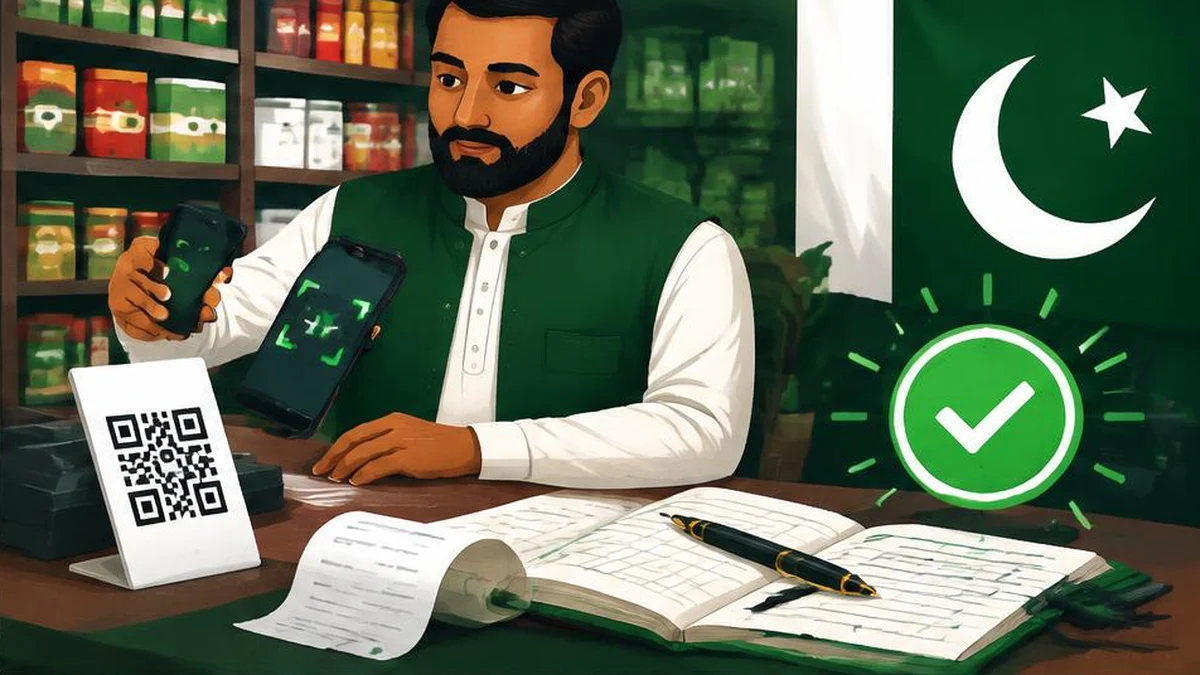
Use SBP’s P2M framework to ask a merchant service provider the right onboarding questions, reconcile payments and handle refund requests without promising approval.
Treat Raast P2M as a merchant service, not a picture
Raast Person to Merchant is Pakistan’s merchant-payment service described in the State Bank of Pakistan’s P2M launch circular. The circular lists QR codes, merchant aliases, IBANs and Request to Pay as acceptance methods. A shop needs an appropriate merchant service arrangement; displaying an ordinary QR image does not establish one.
This distinction matters at a busy counter. A personal transfer, a link to your catalogue and a provider-issued merchant payment request are different things. Start with the bank or merchant service provider that will onboard your business, show your transaction status and support disputes. Do not assume that instructions for one provider’s app describe every other provider’s process.
Ask for the onboarding requirements in writing
SBP’s framework requires merchant service providers to conduct due diligence when onboarding businesses. The circular does not give every shop a universal document checklist or identical commercial agreement. Ask your chosen provider for its current requirements and keep its response.
- Confirm that the offered service is Raast P2M merchant acceptance.
- Ask which business and identity documents are required for your circumstances.
- Confirm the account into which proceeds will be credited.
- Ask which acceptance modes your package actually supports.
- Obtain the merchant agreement, current charges and settlement terms.
- Identify the official support and dispute channels before going live.
The circular permits providers to charge merchants for services, while separately addressing payer charges. That is not evidence that every merchant package is free. Obtain a current written schedule rather than relying on a sales slogan or this historical launch document alone.
If the provider revises its agreement, text compare can help review redacted versions. Remove customer records and account details first. The tool highlights text differences; it does not assess regulatory compliance.
Understand what each acceptance mode does
The circular distinguishes the following options. Availability and screen labels must be checked with the provider.
| Mode | Practical question for the shop |
|---|---|
| Static or dynamic QR | How is the correct merchant and amount shown? |
| Merchant alias | Which identifier should customers select? |
| IBAN payment | How will the shop reconcile the payment? |
| Request to Pay Now | How does the shorter-expiry request appear? |
| Request to Pay Later | How are outstanding longer-expiry requests tracked? |
A Request to Pay is a request, not proof that a payment completed. Train staff to distinguish pending, rejected and confirmed transactions in the merchant interface.
The QR code generator is for ordinary QR creation. It does not onboard a Raast merchant, issue an authorized merchant alias, or provision a bank-linked P2M account. If you use it for a catalogue link, label that code separately from the provider-issued payment code.
Release goods against your own confirmation
SBP’s circular provides for confirmation or rejection notifications and real-time account information. It also addresses merchant crediting in real time or according to agreed timelines involving merchants and third parties. Ask your provider how these requirements appear in your own interface and agreement.
As an operational safeguard, inspect your provider’s transaction record rather than accepting a customer screenshot alone. Match the amount, merchant identity, reference and status to the sale. If the connection fails, follow the provider’s unresolved-payment procedure instead of declaring the payment successful or telling the customer to pay repeatedly without investigation.
Keep a reconciliation log with the sale reference, payment reference, amount, date, status and any support case number. Restrict access and avoid putting full account information in public messages. This is a recommended recordkeeping workflow, not an SBP-mandated spreadsheet format.
A refund request is not a guaranteed refund
The launch circular requires a customer option to initiate return or refund requests. It also says merchant interfaces should allow merchants to accept or reject those requests. Therefore, the presence of the feature does not promise automatic approval.
Match the request to the original transaction, document the reason and use the provider’s designated workflow. Explain the decision and any next steps to the customer. Do not treat a chat message asking for money to a different account as an authenticated refund instruction.
Escalate unresolved service issues with a timeline
For a missing credit, duplicate payment or unresolved complaint, contact the provider through its official complaint channel and retain the acknowledgement. SBP’s Sunwai FAQ explains complaint routing, including the institution’s complaint unit and further forums depending on the matter.
Use the date difference calculator to maintain an accurate chronology, not to invent a legal deadline. Check the current applicable escalation rules directly. For suspected fraud or unauthorized activity, contact the institution promptly; do not wait for a routine diary reminder.
Frequently asked questions
Can an ordinary QR generator create Raast P2M acceptance?
No. Merchant onboarding and payment provisioning must come from an appropriate provider; a generic QR image does not create that relationship.
What is Request to Pay?
SBP describes a payment request initiated by the receiver, with Now and Later options having different expiry periods. A request is not completed payment.
Are merchant services always free?
Do not assume that. The launch circular permits merchant-service charges; obtain the provider’s current written terms.
Does initiating a refund guarantee approval?
No. The circular describes customer requests and a merchant interface that can accept or reject them.
Which records should a shop retain?
A practical log includes the sale reference, payment reference, amount, date, status and any complaint acknowledgement, with access restricted.
Where should an unresolved complaint start?
Use the institution’s official complaint channel and consult Sunwai’s current guidance for further routing appropriate to the issue.
Useful on MayreDukaan
Sources
Facts last checked against these sources on 17 Nov 2026, 06:44 Pakistan time.
Images: Original AI-generated illustration by MayreDukaan; conceptual, not a product screenshot.
More trending articles
 Shopping and DealsUK Fake Online Shops: Check the Seller Before Paying17 Nov 2026 · 5 min read
 AI and SoftwareVerify an AI Summary Against the Original Document17 Nov 2026 · 5 min read
 Artificial IntelligenceGemini Activity Privacy: History, Training and Deletion17 Nov 2026 · 5 min read
 AI and SoftwarePrepare a Spreadsheet for Safer Gemini Analysis17 Nov 2026 · 4 min read