
Great Britain Unit Pricing: A Shelf and Web Label Audit
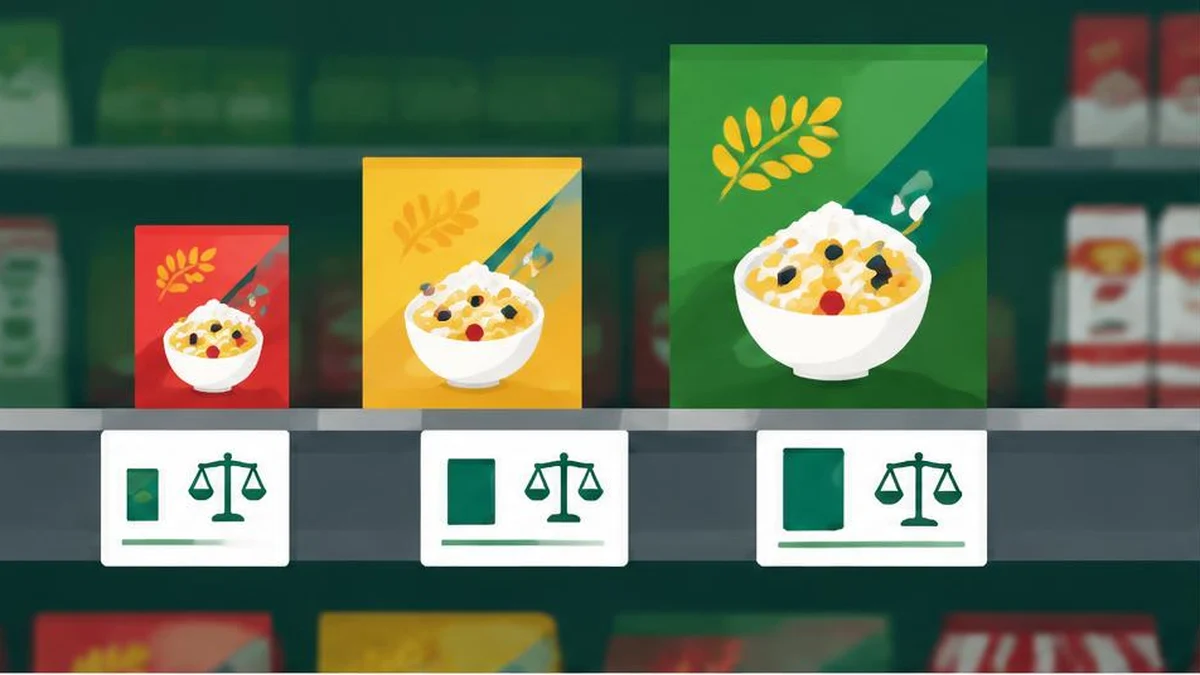
The Department for Business and Trade’s Price Marking Order guidance expressly applies to Great Britain: England, Scotland and Wales. It identifies a separate Northern Ireland order. A retailer selling throughout the UK should therefore not treat this as a single-jurisdiction checklist. Record the locations and online markets involved before reviewing labels. This article is an operational starting point based on the guidance, not a substitute for the legislation or advice about a particular product and promotion.
Set the geographic boundary first
The Department for Business and Trade’s Price Marking Order guidance expressly applies to Great Britain: England, Scotland and Wales. It identifies a separate Northern Ireland order. A retailer selling throughout the UK should therefore not treat this as a single-jurisdiction checklist. Record the locations and online markets involved before reviewing labels. This article is an operational starting point based on the guidance, not a substitute for the legislation or advice about a particular product and promotion.
Confirm which version you are using
The government guidance states that amendments made by the 2024 and 2025 orders take effect on 6 April 2026. That date is confirmed in the primary guidance reviewed for this article; it is not inferred from a news headline. Save the guidance reference alongside your review notes and check for subsequent changes before a rollout. The practical task is to assess the current rules, not to assume that every difference between an old label and a new template was legally required by those amendments.
Separate selling price from unit price
The guidance distinguishes the amount payable for the actual product or quantity from the comparable price for a relevant unit. These numbers answer different customer questions. A pack can have a lower selling price while costing more per comparable quantity. The guidance covers consumer goods and includes online sales as well as physical shops. It does not mean every product needs the same unit basis or that every retailer has identical duties. Determine applicability and exceptions before printing a standard format.
Make a product-level audit sheet
For a small representative sample, record the product, net quantity, selling price, displayed unit basis, displayed unit price and the source used to decide that basis. Include an ordinary item, a promotion, a variable-quantity item and any category you find difficult. Add a column for unresolved scope questions rather than silently treating blanks as exemptions. Ask the person maintaining online prices and the person printing shelf labels to review the same sheet so that neither channel becomes an unexamined exception.
Use arithmetic only after selecting the basis
As an illustrative calculation rather than a legal unit prescription, a hypothetical £3 product containing 750 grams costs £4 per kilogram: divide £3 by 0.75 kilograms. That arithmetic does not establish that a per-kilogram label is legally required for the particular product. Check the guidance for the actual category and circumstances. Keep quantity units consistent before dividing, and calculate from the actual selling price applicable to the offer. Do not use a percentage discount as a substitute for the comparable quantity calculation.
Keep converters in a supporting role
The kilograms to pounds converter and litres to gallons converter can help interpret supplier information expressed in other units. They do not select a lawful display unit or certify a price label. Check which gallon convention is involved before relying on any conversion. The percentage calculator can support a separate discount check; it does not decide how a promotion must be displayed under the Price Marking Order. Preserve original metric quantity information in your audit.
Review presentation and escalate uncertainty
Compare shelf labels, product cards, mobile pages and relevant advertising against the applicable guidance. Look for a missing price, ambiguous quantity, inconsistent basis or a unit price that customers cannot associate with the correct item. Verify any exemption or special treatment directly rather than carrying it over from an old template. Questions about loyalty promotions, deposits, small-business scope or unusual product categories deserve a specific legal check. Do not describe this worksheet as a compliance certificate or assume that a correct calculation cures an unclear display.
Final review checklist
- Confirm Great Britain scope and the current guidance version.
- Verify the unit basis before doing arithmetic.
- Review shelf and online presentation and escalate uncertain exceptions.
Evidence and scope
Research checked on 17 November 2026. The linked primary guidance supports this workflow; illustrative scenarios are not measured market results. Recheck the current official requirements before a consequential decision. 1 2
Frequently asked questions
Does this cover Northern Ireland?
No. The cited guidance covers Great Britain and identifies a separate Northern Ireland order.
Is the April 2026 date confirmed?
Yes. The government guidance states 6 April 2026 for the specified amendments.
Does every product use the same unit?
No. Check the applicable category and exceptions.
Can a converter choose the lawful unit?
No. Converters only support numerical comparisons.
Does correct arithmetic prove compliance?
No. Scope, display and product-specific requirements still need review.
Useful on MayreDukaan
Sources
Facts last checked against these sources on 17 Nov 2026, 06:40 Pakistan time.
Images: Original AI-generated illustration by MayreDukaan; conceptual, not a product screenshot.
More trending articles
 Shopping and DealsUK Fake Online Shops: Check the Seller Before Paying17 Nov 2026 · 5 min read
 AI and SoftwareVerify an AI Summary Against the Original Document17 Nov 2026 · 5 min read
 Artificial IntelligenceGemini Activity Privacy: History, Training and Deletion17 Nov 2026 · 5 min read
 AI and SoftwarePrepare a Spreadsheet for Safer Gemini Analysis17 Nov 2026 · 4 min read