YouTube AI Disclosure: Realistic Edits and Minor Changes
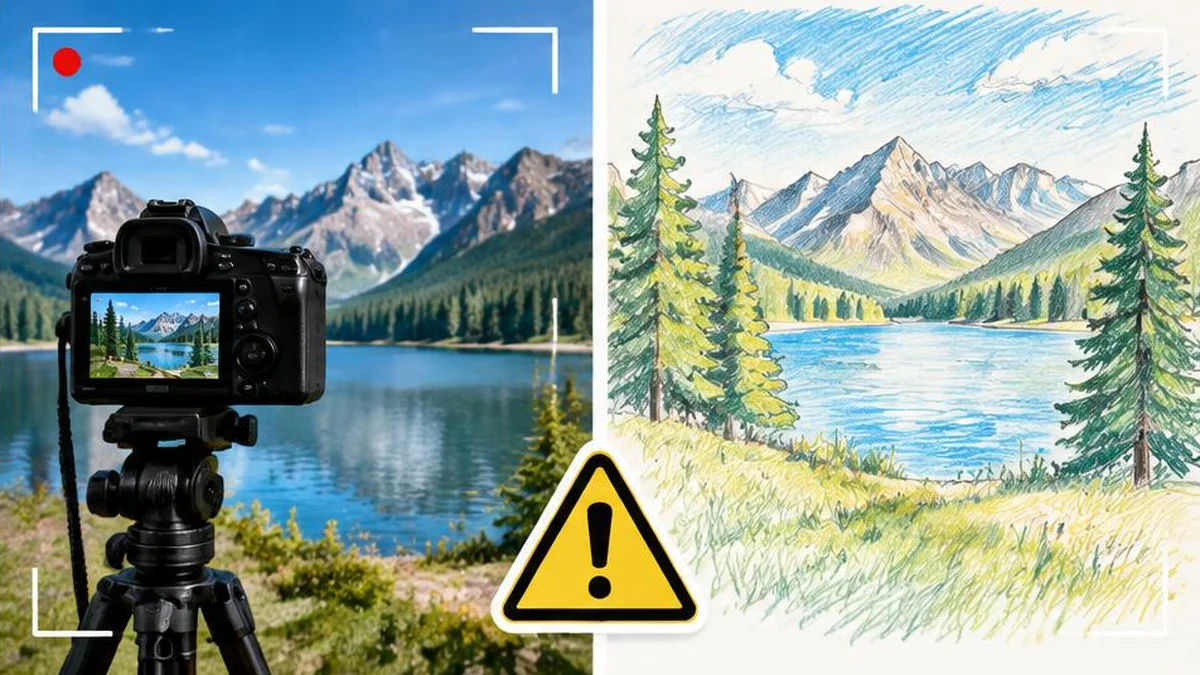
YouTube requires disclosure for realistic AI-generated or meaningfully AI-altered content. The decision turns on what viewers could mistake for reality, not simply whether an AI tool appeared somewhere in the production process. Current official pages also use different names for the disclosure control, which needs editorial resolution.
YouTube requires disclosure for realistic AI-generated or meaningfully AI-altered content. The decision turns on what viewers could mistake for reality, not simply whether an AI tool appeared somewhere in the production process. The official pages use different labels for the control, so this guide explains the policy without assuming one navigation path fits every account.
Judge what the content represents
The current GenAI disclosure policy requires disclosure when generated or altered content makes a real person appear to say or do something they did not, changes footage of a real event or place, or generates a realistic scene that did not happen. Its opening criteria also include music that is the main focus of a video.
Ask what a reasonable viewer could believe occurred. A realistic invented storm approaching a real city raises a different question from a visibly fantastical animation. A disclaimer in a script draft does not substitute for evaluating the finished image, sound, and context together.
Distinguish production assistance from meaningful alteration
The policy lists ordinary production assistance as not requiring disclosure: generating ideas or improving an outline, script, title, thumbnail, or infographic. Caption creation, color or lighting adjustments, background blur, beauty filters, and video sharpening or repair also appear among examples that do not require disclosure.
That is not permission to call a misleading realistic alteration a minor edit. The distinction is whether the edit is primarily aesthetic without misleading viewers about what happened. Consider the result of the complete workflow, including several tools used in sequence.
| Example from the policy | Disclosure treatment described |
|---|---|
| Clearly fantastical unicorn scene | Not required for being unrealistic |
| Color adjustment or background blur | Not required as a minor edit |
| Realistic invented footage of a real place | Required |
| Making a person appear to give advice they never gave | Required |
Examples are not an exhaustive legal or creative checklist. Retain a short production note explaining which scenes were generated and why your disclosure decision follows the current policy.
Treat music as its own review item
The policy explicitly lists AI-generated music among examples requiring disclosure, while its opening criteria refer to music that is the main focus. Do not assume that a music track is exempt merely because the visuals are authentic. Review the policy’s music-specific linked guidance when music is central to the upload.
Cloning your own voice for voiceovers or dubs appears in the examples not requiring disclosure. That example should not be generalized into permission to impersonate someone else. Disclosure does not create consent, a music license, or permission to use another person’s identity. Community Guidelines and other applicable rights remain relevant.
Find the disclosure control in your account
YouTube's dedicated help page uses AI use under Attributes, while the video-settings overview refers to Altered content. Labels may differ across the documented flows. Follow the current disclosure question shown in your own YouTube Studio account and consult the linked policy rather than relying on one universal button name. If the account does not show the expected control, verify the current help instructions before completing the upload.
A descriptive sentence in the video description can add context, but it is not a substitute for the Studio disclosure required by the policy. Keep a record of the question displayed and the choice submitted for the final video.
Keep the publishing record accurate
Use text compare to review revisions to an explanation of generated scenes. A description generator can help organize that explanation, but cannot decide compliance. If you convert your own authorized production file with the video converter, that format change does not settle its disclosure status or erase how it was created.
YouTube says disclosure alone does not limit audience or affect eligibility to earn money. That is not a monetization guarantee for content that violates other rules. It may apply labels automatically for content made with its GenAI tools, C2PA metadata, or its own detections. Some automatic labels can be changed through the survey, but labels associated with YouTube tools, C2PA metadata, or manual review cannot be adjusted according to the dedicated page. Repeated failure to disclose can lead to penalties. Keep the final disclosure decision with your production notes, not just an informal memory of which software you used.
Sources and verification
Official documentation read on November 17, 2026. This is a documentation-based guide, not a device test, channel experiment, or guarantee of availability.
Frequently asked questions
Does AI script assistance always require disclosure?
No. Production assistance such as an outline or script is listed among examples not requiring it.
Do ordinary color adjustments count?
Minor aesthetic color and lighting edits are listed as not requiring disclosure.
What about realistic invented events?
Realistic generated scenes that did not happen require disclosure.
Can disclosure guarantee monetization?
No. Disclosure alone does not affect earning eligibility, but all other rules still apply.
Can YouTube add an AI label?
Yes. The dedicated help page describes automatic labels and limits on removing some labels.
Why does the disclosure control have different names?
The official pages currently use AI use and Altered content in different instructions. Follow the disclosure question shown in your own Studio account and consult the current policy; do not assume a universal navigation path.
Useful on MayreDukaan
Sources
Facts last checked against these sources on 17 Nov 2026, 06:44 Pakistan time.
Images: Original AI-generated illustration by MayreDukaan; conceptual, not a product screenshot.
More trending articles
 YouTube Creator GuidesReplace Claimed YouTube Music Without Rights Shortcuts17 Nov 2026 · 4 min read
 YouTube Creator GuidesYouTube Copyright Claim vs Strike: Read the Notice17 Nov 2026 · 4 min read
 YouTube Creator GuidesYouTube Chapters Not Showing: A Troubleshooting Guide17 Nov 2026 · 4 min read
 YouTube Creator GuidesYouTube Title and Thumbnail Tests: Read the Results17 Nov 2026 · 4 min read