
Return Policies That Match Your Google Product Listings
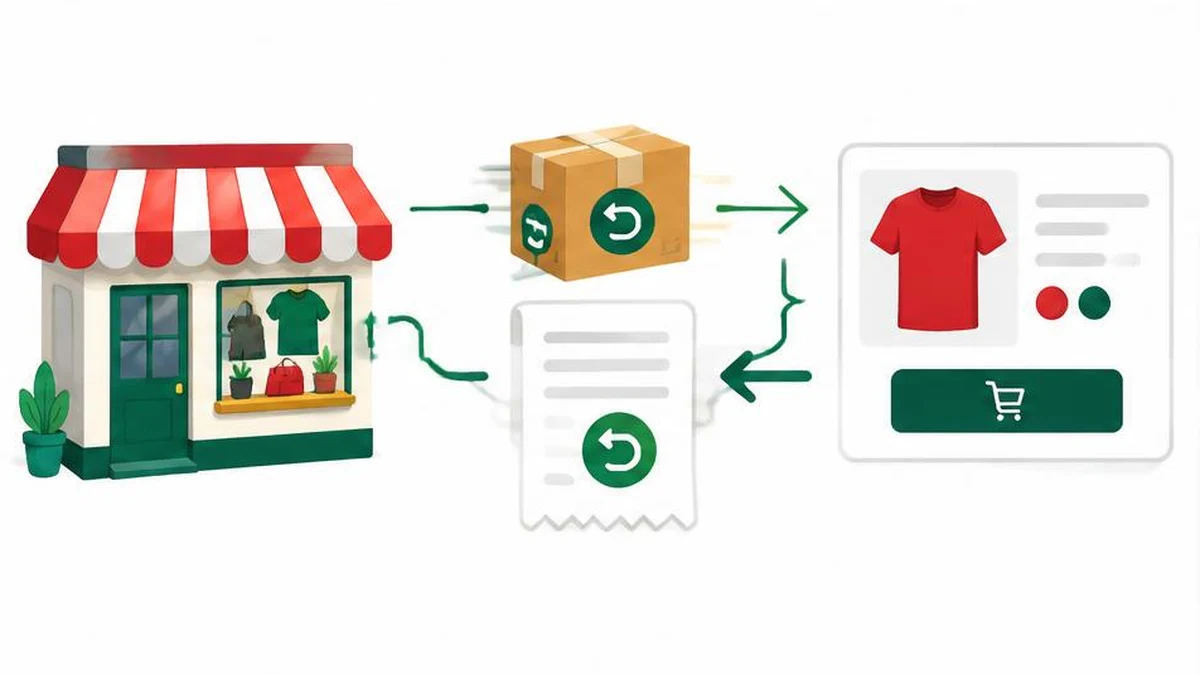
A useful return policy describes what your business can actually deliver. Before writing polished wording, trace a returned order from the customer’s first message to the final refund or other remedy. Identify the contact channel, return destination, inspection responsibility and payment process. If those steps are not agreed internally, a policy template will only conceal the uncertainty. Do not advertise a free return service or an instant refund when your operation cannot consistently provide it.
Start with the real returns process
A useful return policy describes what your business can actually deliver. Before writing polished wording, trace a returned order from the customer’s first message to the final refund or other remedy. Identify the contact channel, return destination, inspection responsibility and payment process. If those steps are not agreed internally, a policy template will only conceal the uncertainty. Do not advertise a free return service or an instant refund when your operation cannot consistently provide it.
Separate legal rights from voluntary benefits
Statutory rights depend on the jurisdiction, product and transaction. A voluntary change-of-mind offer is a separate layer and should not appear to replace those rights. For example, GOV.UK explains that online and distance sellers must provide cancellation information and other pre-contract details, with exceptions. That is a UK example, not a worldwide return rule. Identify each destination you serve and obtain appropriate local guidance before assigning a legal cancellation window, deduction or excluded product category.
Map policies by country and product
Google’s Merchant Center guidance supports return policies associated with countries and product groups. Build a table before configuring the account so that general merchandise, customized items and other special categories do not accidentally receive identical terms. Record the legal review needed for each exception. A product may need different customer information depending on where it is sold. Do not label an entire catalog non-returnable merely because some items have special restrictions or because a supplier refuses to take them back.
Keep the website and account consistent
Compare the customer-facing page with the policy settings you actually submit in Merchant Center. Review return window, conditions, shipping responsibility and any fees where those fields apply. Google describes how provided and verified return information interacts with other information sources; do not rely on an assumption that its systems will infer every detail correctly. If a store policy changes, update the relevant account settings and affected product assignments together. Keep a dated copy of the previous wording for handling older orders.
Write for the decision customers face
Use headings that answer practical questions: how to request a return, where to send it, what information to include and how the business communicates the outcome. Explain voluntary conditions without making sweeping statements about statutory claims. A missing original box, for example, should not automatically be treated as the answer to every type of complaint. Avoid vague phrases such as “refunds at our discretion” where they could misrepresent rights. Have sensitive exclusions reviewed rather than copying an aggressive competitor’s policy.
Use editing tools without outsourcing legal judgment
Use text compare to identify differences between a proposed policy and the currently published version. The word counter can help keep a short summary manageable, but brevity is not the same as completeness. The date difference calculator can support an illustrative elapsed-time calculation after the relevant start date and legal counting rules have been determined. None of these tools establishes the applicable law, accounts for every deadline exception or synchronizes policy settings with Google.
Test the policy against actual scenarios
Run a normal change-of-mind request, a damaged delivery and an item described incorrectly through your draft. Repeat the exercise for a cross-border order and a special product category if you sell either. Ask a staff member who did not write the policy to explain the next step. Record unresolved questions and seek jurisdiction-specific advice before publication. Platform acceptance does not certify legal compliance, and a clear document cannot cure an operation that routinely fails to follow its own promises.
Final review checklist
- Identify the destination country and product category.
- Separate statutory rights from voluntary store benefits.
- Update the website, account settings and staff process together.
Evidence and scope
Research checked on 17 November 2026. The linked primary guidance supports this workflow; illustrative scenarios are not measured market results. Recheck the current official requirements before a consequential decision. 1 2
Frequently asked questions
Can one return policy cover every country?
Only after confirming that the wording and settings are appropriate for every relevant market.
Does Google approval establish legality?
No. Platform review and legal compliance are different matters.
Should store benefits replace statutory rights?
No. Explain them separately and do not restrict applicable rights.
Can a date calculator decide a deadline?
No. Establish the governing rule, start date and exceptions first.
What should change when the policy changes?
Review the website, account settings, product assignments and staff instructions together.
Useful on MayreDukaan
Sources
Facts last checked against these sources on 17 Nov 2026, 06:40 Pakistan time.
Images: Original AI-generated illustration by MayreDukaan; conceptual, not a product screenshot.
More trending articles
 Shopping and DealsUK Fake Online Shops: Check the Seller Before Paying17 Nov 2026 · 5 min read
 AI and SoftwareVerify an AI Summary Against the Original Document17 Nov 2026 · 5 min read
 Artificial IntelligenceGemini Activity Privacy: History, Training and Deletion17 Nov 2026 · 5 min read
 AI and SoftwarePrepare a Spreadsheet for Safer Gemini Analysis17 Nov 2026 · 4 min read