Barcode types explained
By MayreDukaan Research · Researched 2026-11-17
A barcode is a machine-readable symbol, not simply a product number written in a different font. GS1 distinguishes linear symbols, made from lines and spaces, from two-dimensional symbols that encode information across a pattern. The symbol carries data such as a product identifier, and some GS1 applications also carry attributes including serial numbers, batch numbers and dates. [Source: GS1, barcodes overview.]
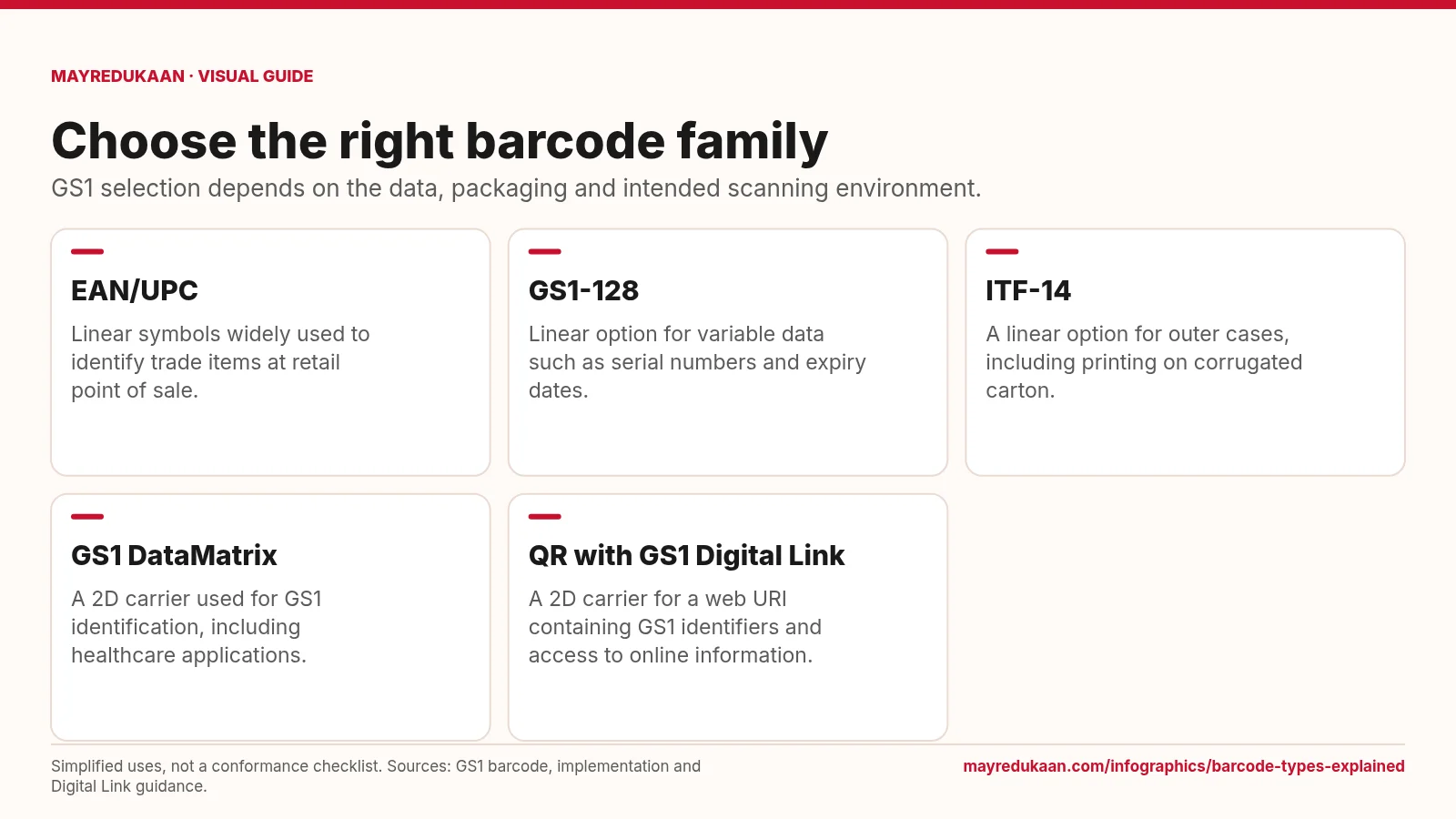
The graphic summarizes five useful families and typical applications rather than declaring a universal winner. GS1's implementation guidance ties symbol selection to the place of scanning, the information required and the packaging material. A checkout label, a corrugated shipping case and a healthcare pack can have different requirements even when all need reliable identification. Check the relevant application rules before choosing a symbol or printing production packaging. [Source: GS1, ten steps to barcode implementation.]
What the diagram shows
- EAN/UPC: Linear symbols widely used to identify trade items at retail point of sale.
- GS1-128: Linear option for variable data such as serial numbers and expiry dates.
- ITF-14: A linear option for outer cases, including printing on corrugated carton.
- GS1 DataMatrix: A 2D carrier used for GS1 identification, including healthcare applications.
- QR with GS1 Digital Link: A 2D carrier for a web URI containing GS1 identifiers and access to online information.
Simplified uses, not a conformance checklist. Sources: GS1 barcode, implementation and Digital Link guidance.
Read the three linear barcode cards
EAN/UPC, GS1-128 and ITF-14 are the linear options in the graphic. GS1's implementation guide identifies EAN/UPC as the first choice for trade items scanned at retail point of sale, while noting that other GS1 symbols may apply in some cases. For variable information such as serial numbers, expiry dates or measures, the guide points to GS1-128, GS1 DataBar or standardized 2D symbols. For outer cases in logistics, particularly when printing directly on corrugated carton, it lists GS1-128 or ITF-14 as possible choices. These are application-based recommendations, not permission to substitute one symbol everywhere another is used. [Source: GS1, ten steps to barcode implementation.]
Distinguish the two-dimensional options
The last two cards are 2D carriers. GS1 explains that 2D patterns can carry more data while occupying less space than linear symbols. GS1 DataMatrix is an important carrier in healthcare, where GS1 identifiers are normally encoded using the relevant GS1 structure rather than a Digital Link URI. A QR code with GS1 Digital Link instead carries a web URI that includes GS1 identifiers and can lead to online information. These are not interchangeable descriptions of the same payload. The graphic separates them so that the familiar square appearance does not hide the differences in syntax and application. [Sources: GS1, barcodes overview and Digital Link.]
Match identifiers, syntax and printing requirements
GS1 separates identification keys from barcode carriers: the symbol is the means of encoding and scanning the information. Its guidance recommends deciding what needs identifying, where the symbol will be scanned and which information must be present before finalizing the design. Printing also matters. The implementation guide discusses symbol dimensions, contrast, quiet zones and placement because a correct number alone does not make a reliable barcode. For Digital Link applications, linked online content can change without changing the printed QR symbol when the URI and redirection arrangement support that use. Treat the cards as a starting map, then consult the detailed GS1 rules for your application. [Sources: GS1, implementation guide and Digital Link.]
Key facts
- GS1 uses both linear and two-dimensional barcode carriers.
- EAN/UPC is a standard choice for retail point-of-sale identification.
- GS1-128 can carry variable information such as serial numbers and expiry dates.
- ITF-14 is an option for outer cases in logistics environments.
- A QR code with GS1 Digital Link can carry a web URI containing GS1 identifiers.
Frequently asked questions
Is a GTIN the same thing as a barcode symbol?
No; a GTIN is an identification key, while a barcode is a carrier that can encode it.
Which types can carry expiry dates?
GS1's implementation guide lists GS1-128, GS1 DataBar and GS1-standardized 2D symbols for variable information including expiry dates.
Does every QR code use GS1 Digital Link?
No; GS1 Digital Link specifies how GS1 identifiers are represented in a web URI, rather than describing every possible QR payload.
Related free tools
Sources
- GS1: Barcodes overview — accessed 2026-11-17
- GS1: Ten steps to barcode implementation — accessed 2026-11-17
- GS1: Digital Link — accessed 2026-11-17
- GS1: Two-dimensional barcodes — accessed 2026-11-17
More visual guides
How QR codes work
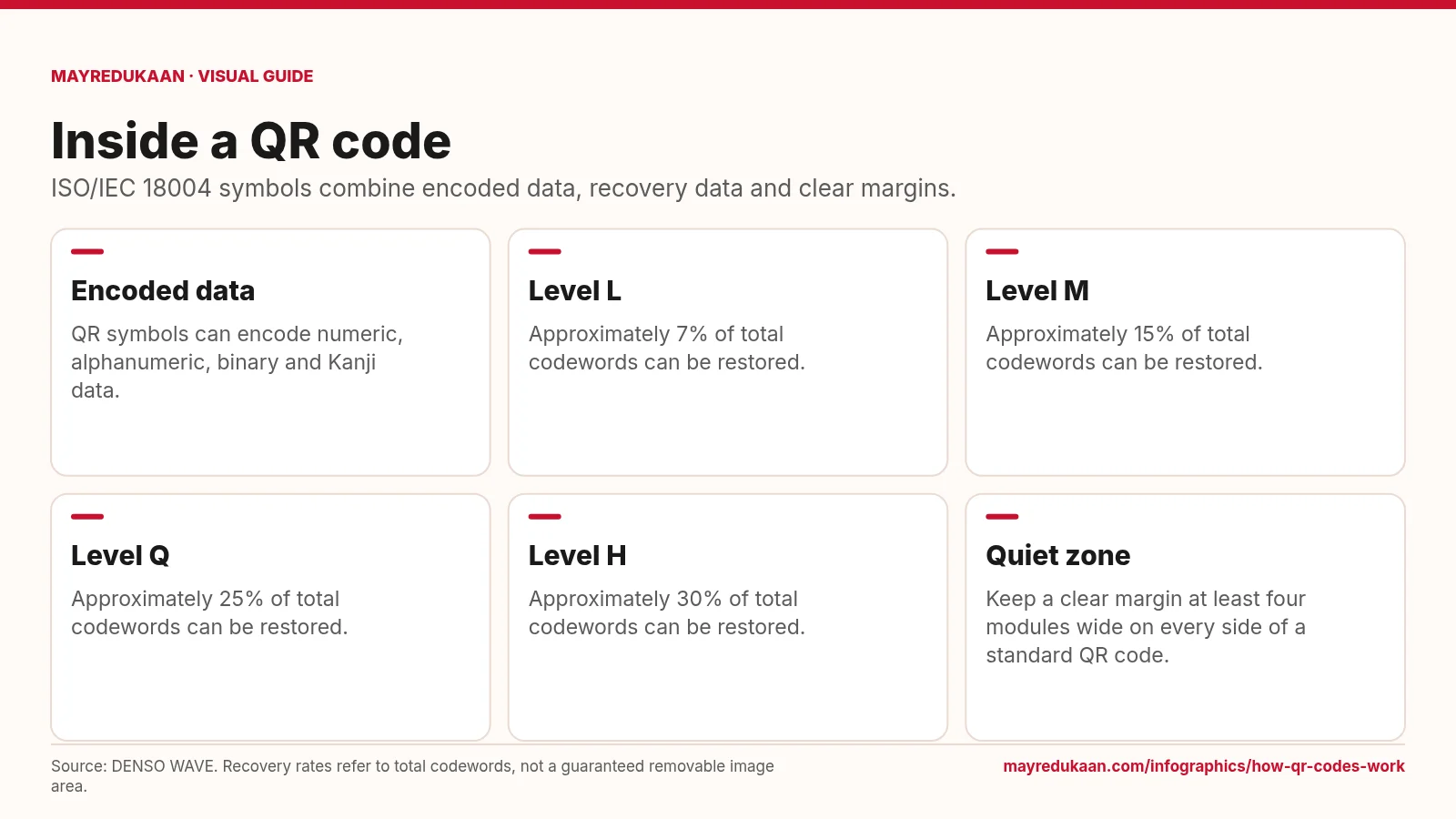
QR error correction adds recoverability, but it does not make every pattern of damage harmless.
How video compression works
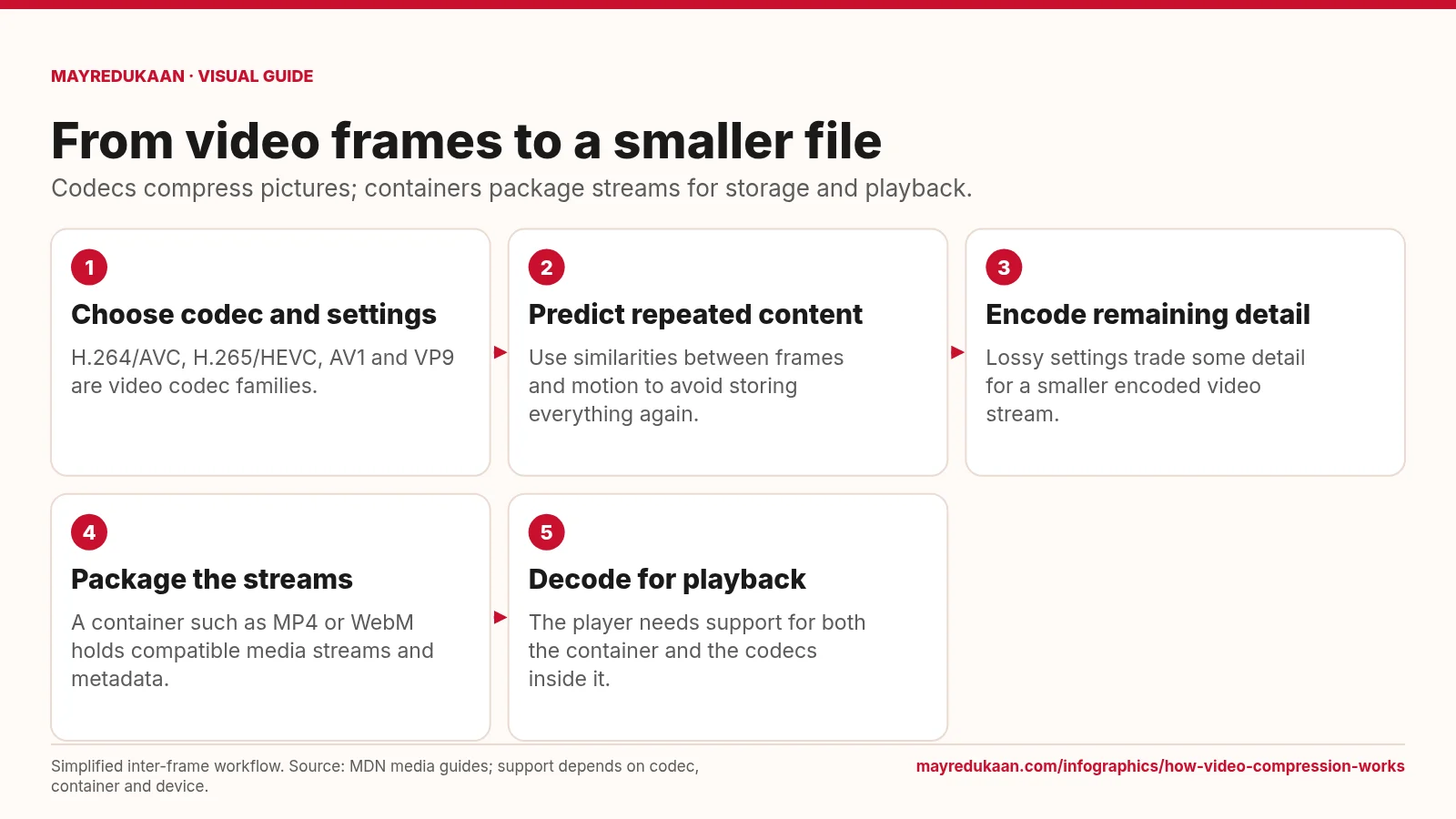
A filename extension describes the package, not every detail of how its video was compressed.
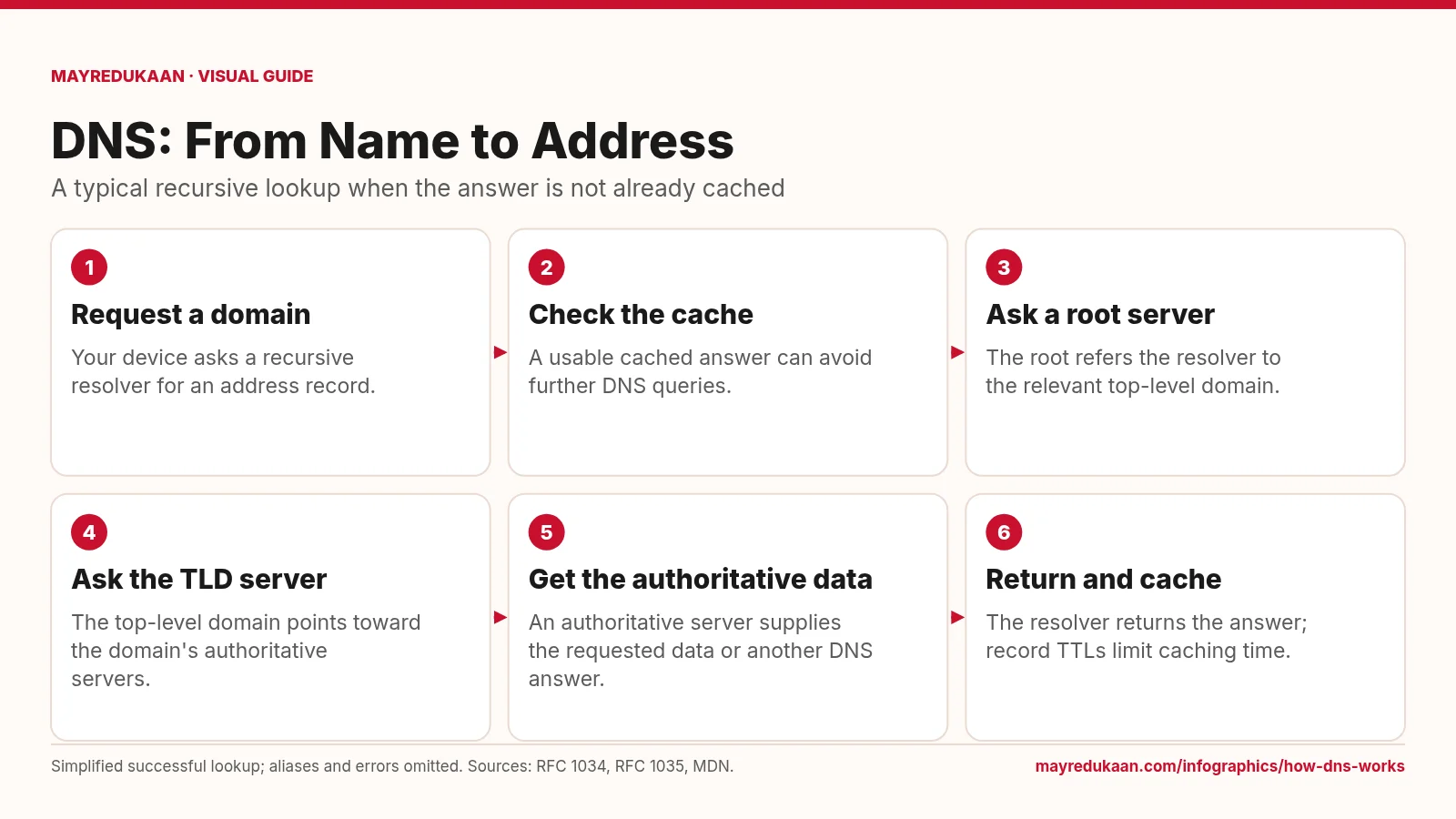
How DNS works
DNS resolves names through a distributed hierarchy, while caching can shorten the lookup.