How QR codes work
By MayreDukaan Research · Researched 2026-11-17
A QR code is a standardized symbol that carries encoded information in a pattern of modules. DENSO WAVE identifies ISO/IEC 18004 as its international standard and lists numeric, alphanumeric, binary and Kanji data among the supported data types. The symbol also includes error-correction information so a reader can recover data when some codewords are damaged or dirty. [Sources: DENSO WAVE, standardization and error correction.]
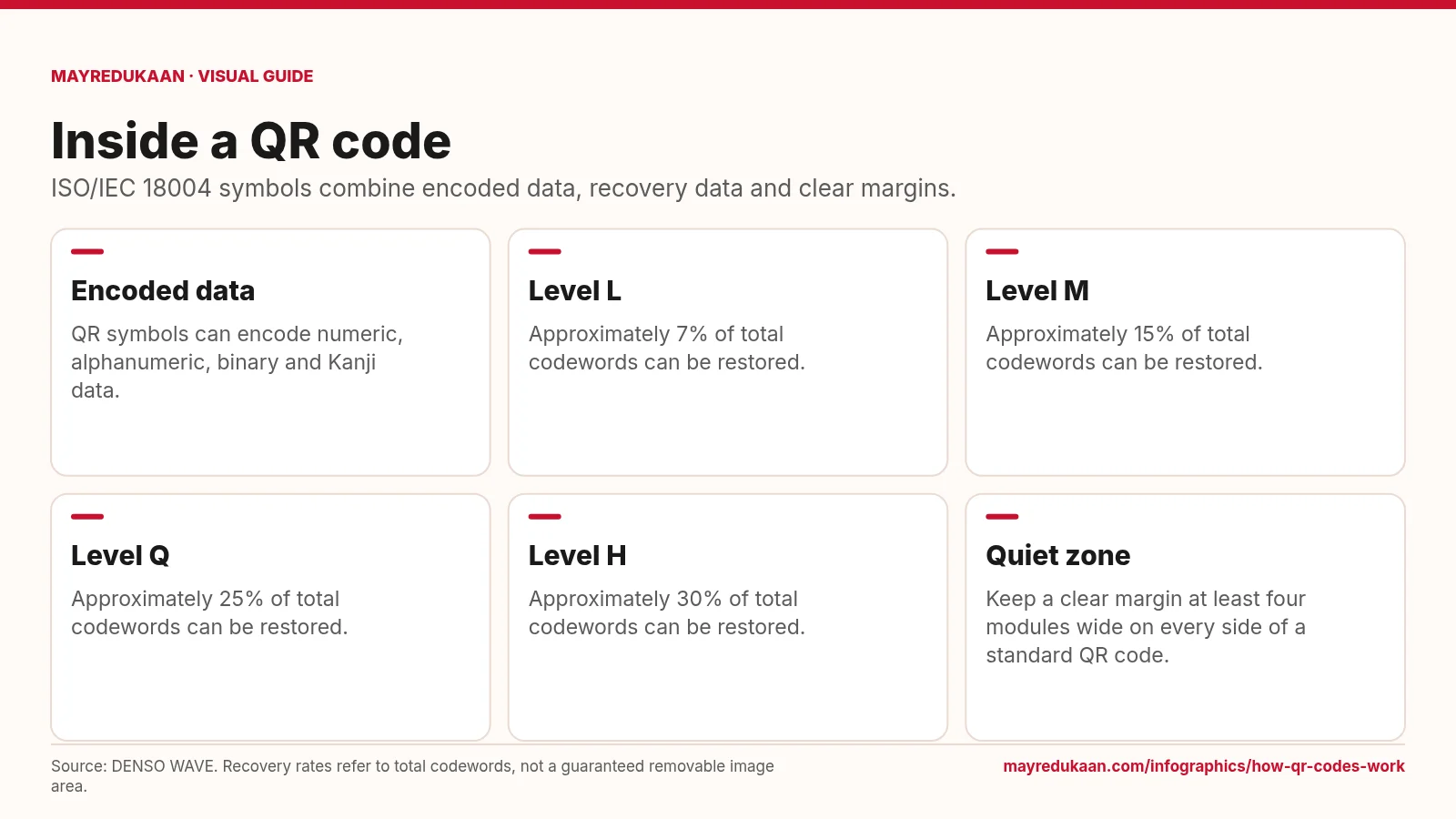
The graphic separates the payload, the four error-correction choices and the clear area around the symbol. These features solve different problems: the payload carries information, correction adds redundancy, and the quiet zone keeps surrounding artwork away from the symbol. Choosing the highest correction level is not automatically the best layout decision, because extra redundancy affects the data capacity and size needed for a particular message. [Sources: DENSO WAVE, error correction and code area.]
What the diagram shows
- Encoded data: QR symbols can encode numeric, alphanumeric, binary and Kanji data.
- Level L: Approximately 7% of total codewords can be restored.
- Level M: Approximately 15% of total codewords can be restored.
- Level Q: Approximately 25% of total codewords can be restored.
- Level H: Approximately 30% of total codewords can be restored.
- Quiet zone: Keep a clear margin at least four modules wide on every side of a standard QR code.
Source: DENSO WAVE. Recovery rates refer to total codewords, not a guaranteed removable image area.
Start with the data and the standard
The encoded-data card summarizes the kinds of information supported by the QR specification: numeric, alphanumeric, binary and Kanji data. DENSO WAVE's outline specification places QR Code under ISO/IEC 18004 and describes standard symbols ranging from 21 by 21 to 177 by 177 modules. The symbol version and the selected error-correction level both matter when determining capacity. Do not treat the maximum capacity for one data type as a guarantee for every message or correction setting. The graphic intentionally focuses on the relationship between payload, recovery and clear space rather than reproducing the complete encoding specification. [Source: DENSO WAVE, QR Code Standardization.]
Read L, M, Q and H as codeword recovery levels
The four central cards show DENSO WAVE's approximate restoration rates: L is 7%, M is 15%, Q is 25% and H is 30% of total codewords. A codeword is an eight-bit unit in this explanation. QR error correction uses Reed-Solomon coding to add recovery information to the original data. Raising the level increases recoverability but also increases the information that must fit into the symbol. These percentages describe codewords, not a guarantee that the same fraction of any visible image can be covered or cut away. Keep that distinction when evaluating decorative changes or damaged printed codes. [Sources: DENSO WAVE, standardization and error correction.]
Preserve clear space and choose a workable size
The quiet-zone card describes a separate requirement from error correction. DENSO WAVE specifies a clear margin four modules wide on all sides of a standard QR symbol. That area should contain no printing. The total layout footprint therefore includes the module grid plus the surrounding margin, not just the dark squares that catch the eye. Its code-area guidance shows how symbol version and module size determine the physical dimensions, then adds the quiet zone. When a code will not fit, revisit the data, version and module size rather than assuming a stronger correction level permits removal of the required blank space. [Source: DENSO WAVE, determining the code area.]
Key facts
- QR Code is standardized in ISO/IEC 18004.
- QR error correction uses Reed-Solomon coding.
- The approximate L, M, Q and H restoration rates are 7%, 15%, 25% and 30% of total codewords respectively.
- Higher correction levels add recovery information and affect the required symbol capacity.
- A standard QR code requires a clear quiet zone four modules wide on every side.
Frequently asked questions
Does H mean I can hide any 30% of the picture?
No; the approximate 30% restoration figure refers to total codewords, not an arbitrary removable image area.
Is a QR code limited to numbers?
No; the specification also supports alphanumeric, binary and Kanji data.
What is the quiet zone?
It is the unprinted margin around the symbol, four modules wide on every side for a standard QR code.
Related free tools
Sources
- DENSO WAVE: QR Code Standardization — accessed 2026-11-17
- DENSO WAVE: Error Correction Feature — accessed 2026-11-17
- DENSO WAVE: Determining the code area — accessed 2026-11-17
More visual guides
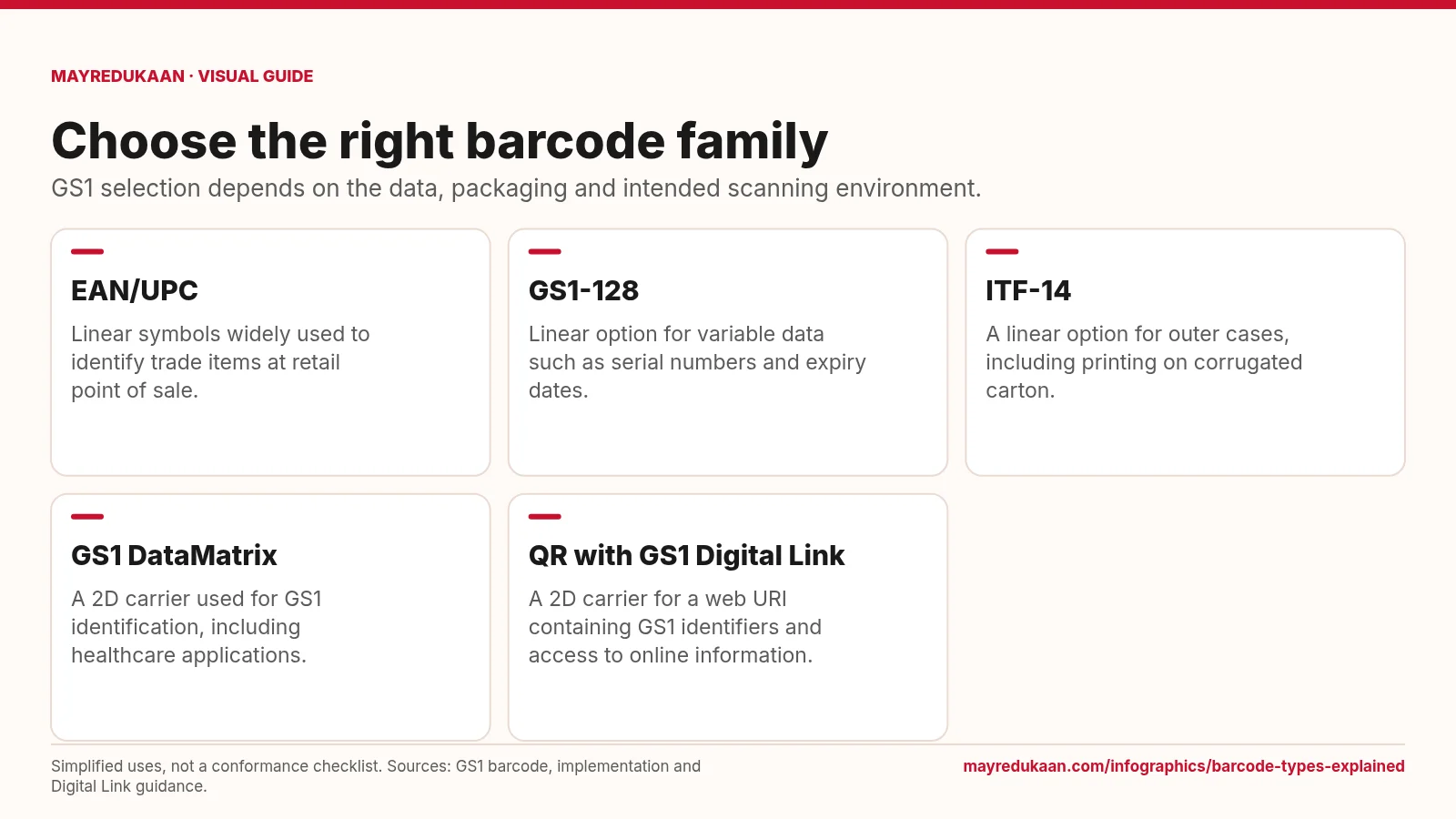
Barcode types explained
The barcode carrier, encoded data and scanning environment must work together.
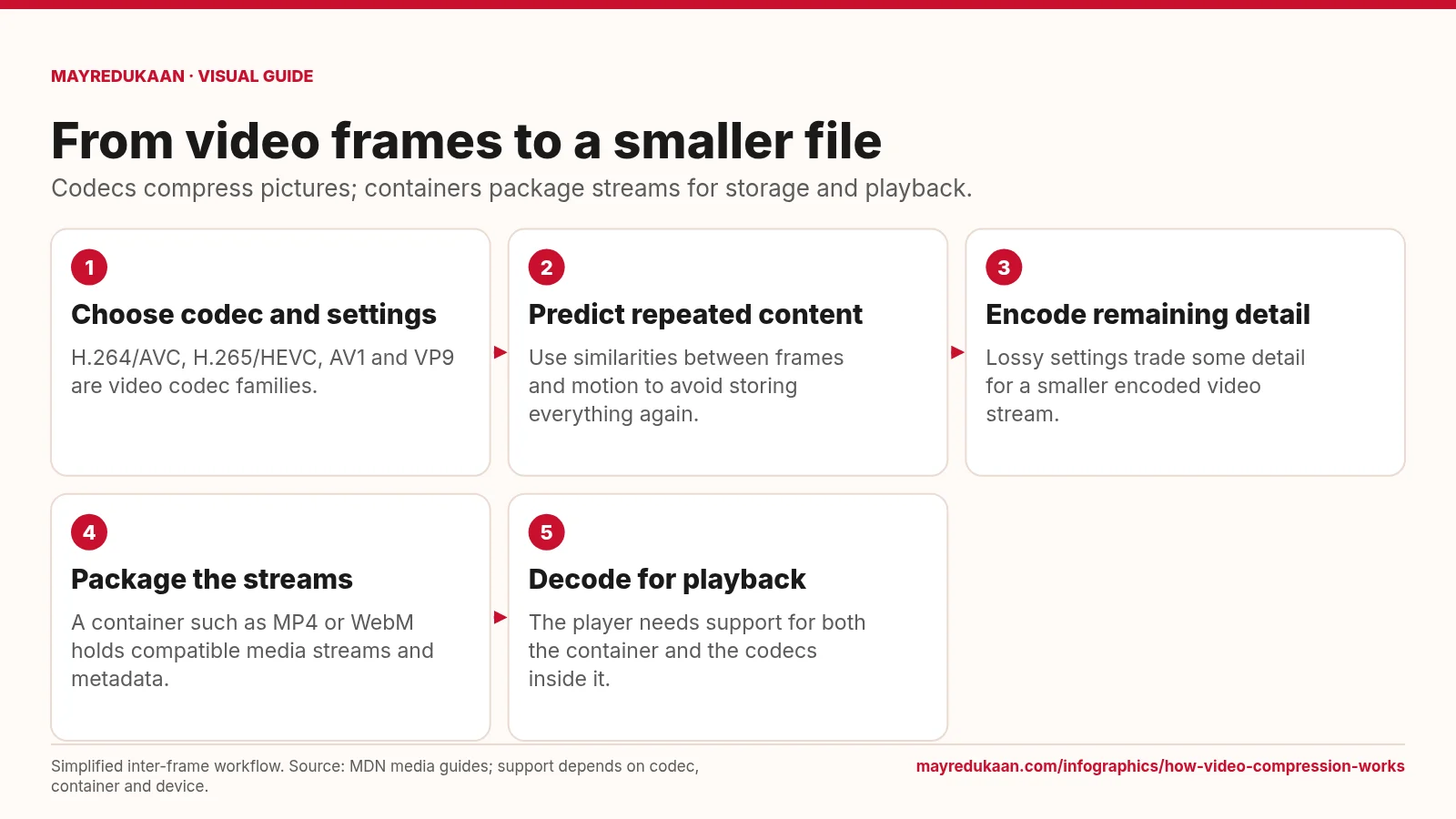
How video compression works
A filename extension describes the package, not every detail of how its video was compressed.
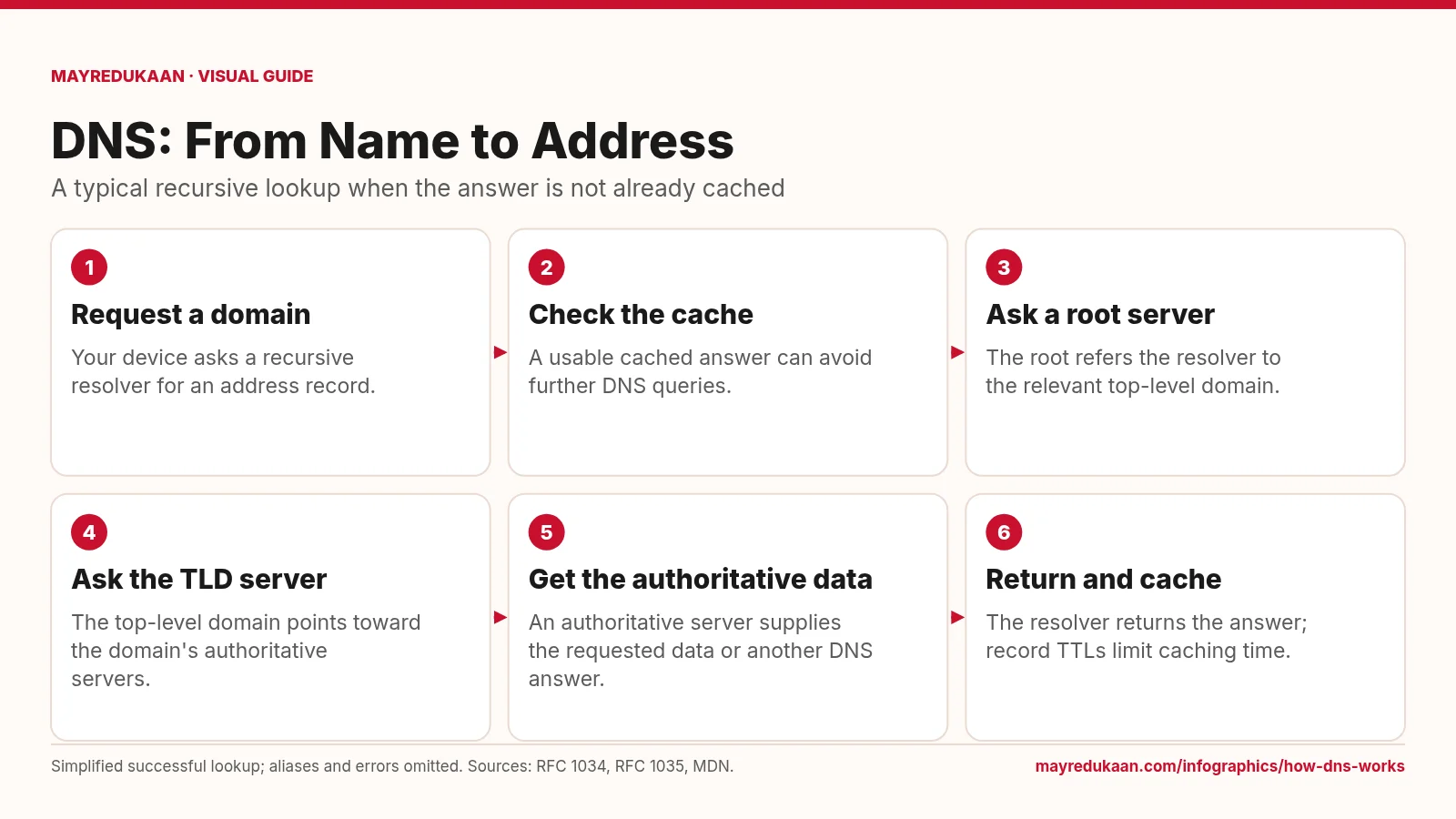
How DNS works
DNS resolves names through a distributed hierarchy, while caching can shorten the lookup.